On this page
- Why indoor forklift choice matters
- Electric forklifts are usually the best choice indoors
- The best indoor forklift type depends on the job
- Counterbalance forklifts
- Reach trucks
- Order pickers
- Powered pallet trucks and stackers
- Cushion tyres are usually better indoors
- What to think about before choosing
- When LPG forklifts may still be used
- Indoor safety and operator comfort matter too
- A smaller truck is not always the best truck
- The best indoor forklift for most businesses
- Why a site review helps
- Final thoughts
Choosing the right forklift for indoor work is not only about lift capacity. It is about how the truck performs inside a warehouse, factory, or stockroom where space is tighter, floors are smoother, and air quality matters more.
The best forklift for indoor use is usually an electric model, but that is not the whole answer. The right choice depends on your aisle width, load type, lifting height, shift pattern, and how much manoeuvrability you need.
This guide explains what makes a forklift suitable for indoor use and which types are usually the best fit.
Why indoor forklift choice matters
An indoor forklift works in a very different environment from an outdoor one. Warehouses and internal handling areas usually have:
- Smoother floors
- Narrower aisles
- Lower noise tolerance
- Less ventilation
- More pedestrians and nearby stock
- More frequent turning and reversing
That means the best indoor forklift is usually one that is compact, clean-running, and easy to control in small spaces.
Using the wrong truck indoors can create problems with safety, air quality, maintenance, and day-to-day efficiency.
Electric forklifts are usually the best choice indoors
In most indoor settings, electric forklifts are the strongest option.
That is because they offer several clear benefits for warehouse and internal operations.
Zero exhaust emissions
Electric forklifts do not produce exhaust fumes during use. That makes them far better suited to enclosed buildings where air quality matters.
In a warehouse or factory, this is a major advantage. Diesel or petrol exhaust is not practical indoors for long periods, especially where staff work close to the truck throughout the day.
Lower noise levels
Electric forklifts are usually quieter than combustion engine trucks.
That can make a big difference indoors, where noise carries more easily and operators may be working close to pickers, warehouse staff, and supervisors. A quieter truck can help communication, comfort, and general working conditions.
Better manoeuvrability
Many electric forklifts are designed with indoor movement in mind. They are often more compact and easier to turn in narrow aisles than larger outdoor-focused trucks.
That matters if your team works in:
- Tight racking layouts
- Smaller loading areas
- Picking aisles
- Stockrooms with limited turning space
Cleaner operation
Indoor environments usually need cleaner equipment. Electric forklifts avoid fuel handling and reduce the risk of dirty exhaust deposits in enclosed workspaces.
For sectors like food, retail logistics, and manufacturing, that cleaner operation can be especially important.
The best indoor forklift type depends on the job
Electric power is usually the starting point, but there is still more than one indoor forklift style to choose from.
Counterbalance forklifts
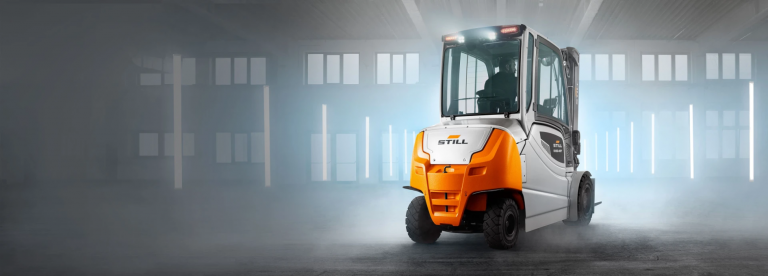
A standard electric counterbalance forklift is one of the most common choices for indoor work.
This type works well when you need:
- General warehouse loading and unloading
- Pallet movement across open floor space
- Good all-round flexibility
- Straightforward operator use
Counterbalance forklifts are a strong option if you have enough aisle width and need a practical truck for mixed warehouse tasks.
They are often best in indoor sites that are not extremely narrow.
Reach trucks
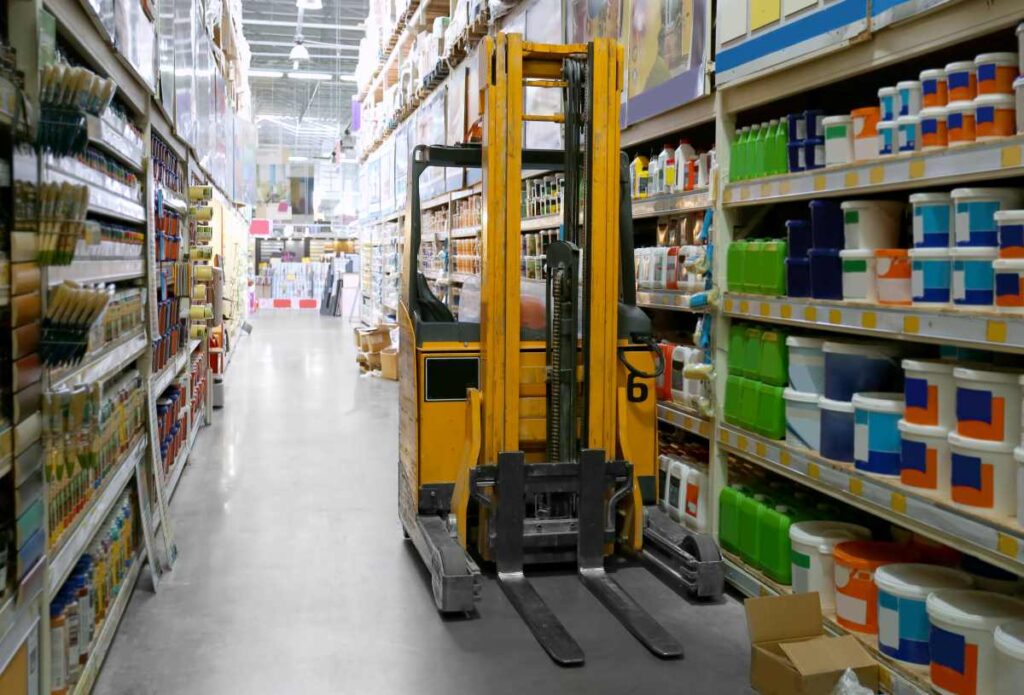
Reach trucks are often one of the best options for indoor warehouse use where space is tight and racking is high.
They are designed to reach into pallet racking while keeping the truck itself compact.
They work especially well for:
- Narrower aisle warehouses
- High-bay storage
- Pallet storage at height
- Indoor stock handling where space is valuable
If your operation depends on vertical storage, a reach truck may be a better indoor option than a standard counterbalance forklift.
Order pickers
Order pickers are ideal for indoor operations focused on picking rather than only pallet transport.
They are commonly used in:
- Distribution centres
- E-commerce warehouses
- Retail fulfilment operations
- Stock-picking environments
If staff need to access stock at different levels and prepare orders efficiently, an order picker may be the best indoor equipment choice.
Powered pallet trucks and stackers
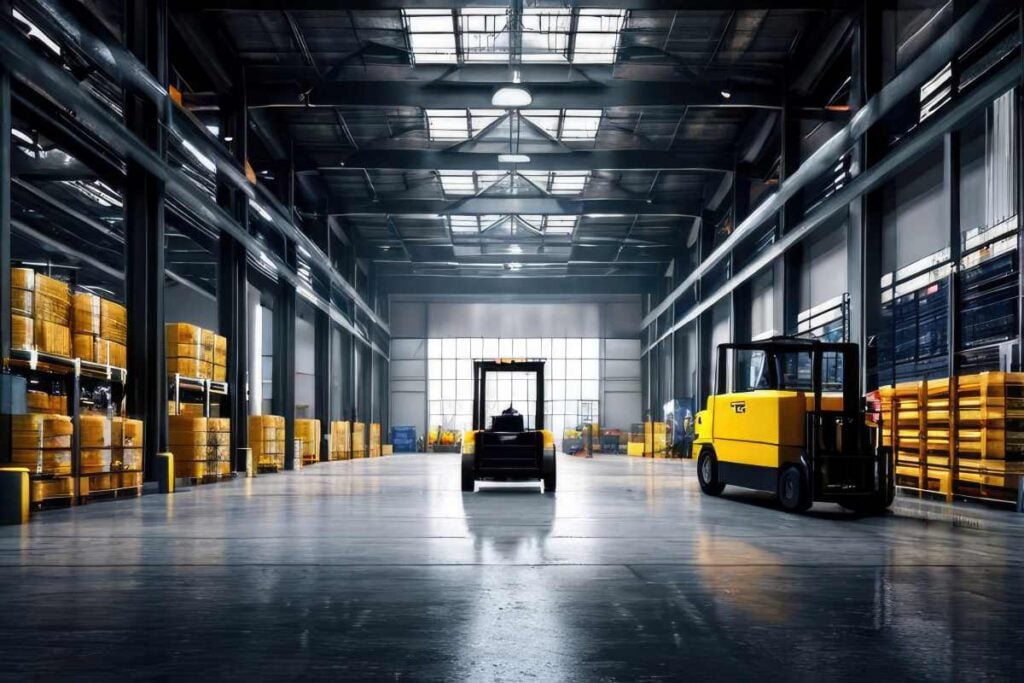
Not every indoor operation needs a full forklift.
If loads are lighter, travel distances are shorter, or storage height is limited, a powered pallet truck or stacker may be the better fit.
These are often useful for:
- Short-distance pallet movement
- Back-of-house stock areas
- Smaller warehouses
- Loading support in tighter spaces
In some businesses, these machines handle indoor tasks more efficiently than a larger forklift.
Cushion tyres are usually better indoors
The tyre type matters as much as the truck type.
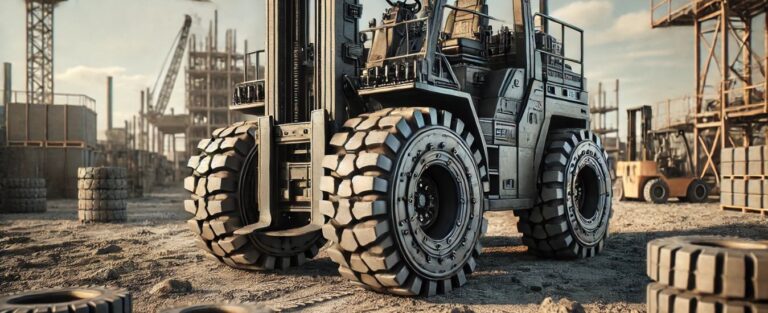
Indoor forklifts usually work best with cushion tyres. These are solid tyres designed for smooth warehouse floors.
They offer:
- Better manoeuvrability
- A tighter turning circle
- Lower maintenance than pneumatic tyres
- Strong performance on flat internal surfaces
They are not designed for rough outdoor ground, but for indoor use they are usually the right fit.
This is one of the key differences when comparing indoor vs outdoor forklifts, because outdoor trucks often need pneumatic tyres and a more rugged setup.
What to think about before choosing
The best indoor forklift is the one that fits the actual job, not just the one with the right badge or lift capacity.
A few key questions can help.
How wide are your aisles?
If your warehouse has narrow aisles, a reach truck or more compact electric model may be far better than a standard counterbalance forklift.
How high are your racks?
If you need to store and retrieve loads at height, that pushes the decision towards reach trucks or specialist warehouse trucks.
What type of loads are you handling?
Heavy palletised goods may suit a counterbalance forklift. Fast-moving order picking may call for a different solution.
How long are your shifts?
Battery performance and charging plans matter indoors. You need to know whether a truck can cover the working day or whether battery changes or charging breaks are needed.
How much turning space do you have?
Compact design is often more important indoors than maximum engine power.
When LPG forklifts may still be used
While electric forklifts are usually the best choice indoors, some indoor operations still use LPG trucks in certain settings.
This tends to happen where:
- Ventilation is strong
- Indoor and outdoor use are both needed
- The site needs quick refuelling rather than charging
- Heavier-duty demands make electric options less practical for that setup
Even then, many businesses still prefer electric where possible because it suits enclosed environments better overall.
Indoor safety and operator comfort matter too
A forklift that works well indoors should not only fit the space. It should also help operators work safely and comfortably.
That usually means looking for:
- Good all-round visibility
- Smooth steering and control
- Low noise
- Easy access on and off the truck
- Stable handling in narrow working areas
Indoor sites often involve more frequent stops, starts, pedestrians, and tight corners than yard work, so control and comfort are a big part of the decision.
A smaller truck is not always the best truck
Many buyers assume the smallest forklift is always the best for indoor use.
That is not always true.
A truck still needs to:
- Lift the right weight safely
- Reach the right height
- Stay stable with your typical loads
- Match your actual workflow
If the truck is too small for the work, it can reduce efficiency just as much as an oversized truck can reduce manoeuvrability.
The best indoor forklift for most businesses
For many businesses, the best indoor forklift is an electric counterbalance or electric reach truck.
A counterbalance model is often best for general indoor pallet handling with enough open floor space.
A reach truck is often best for narrower aisles and higher warehouse storage.
If the work is lighter or more specialised, powered pallet trucks, stackers, or order pickers may be the smarter indoor choice.
Businesses looking for dependable warehouse transport equipment for daily use can explore Acclaim’s range of new and used forklifts for sale across multiple indoor handling categories.
Why a site review helps
Forklift choice is easier when it is based on the actual site rather than assumptions.
A proper review of your warehouse layout, aisle width, load profile, and shift pattern often reveals the best fit quickly. It can also help avoid buying a truck that is too large, too limited, or too specialised for the real job.
That matters because indoor forklift efficiency usually comes down to matching the truck to the space.
Final thoughts
The best type of forklift for indoor use is usually electric, but the right model depends on what your business needs the truck to do.
For general indoor handling, an electric counterbalance forklift is often a strong all-round choice. For tighter spaces and higher racking, a reach truck may be the better option. In lighter-duty operations, pallet trucks, stackers, and order pickers may be more efficient than a full forklift.
The key is to choose for the environment, not only the load. Indoors, space, air quality, control, and turning performance often matter just as much as lifting power.