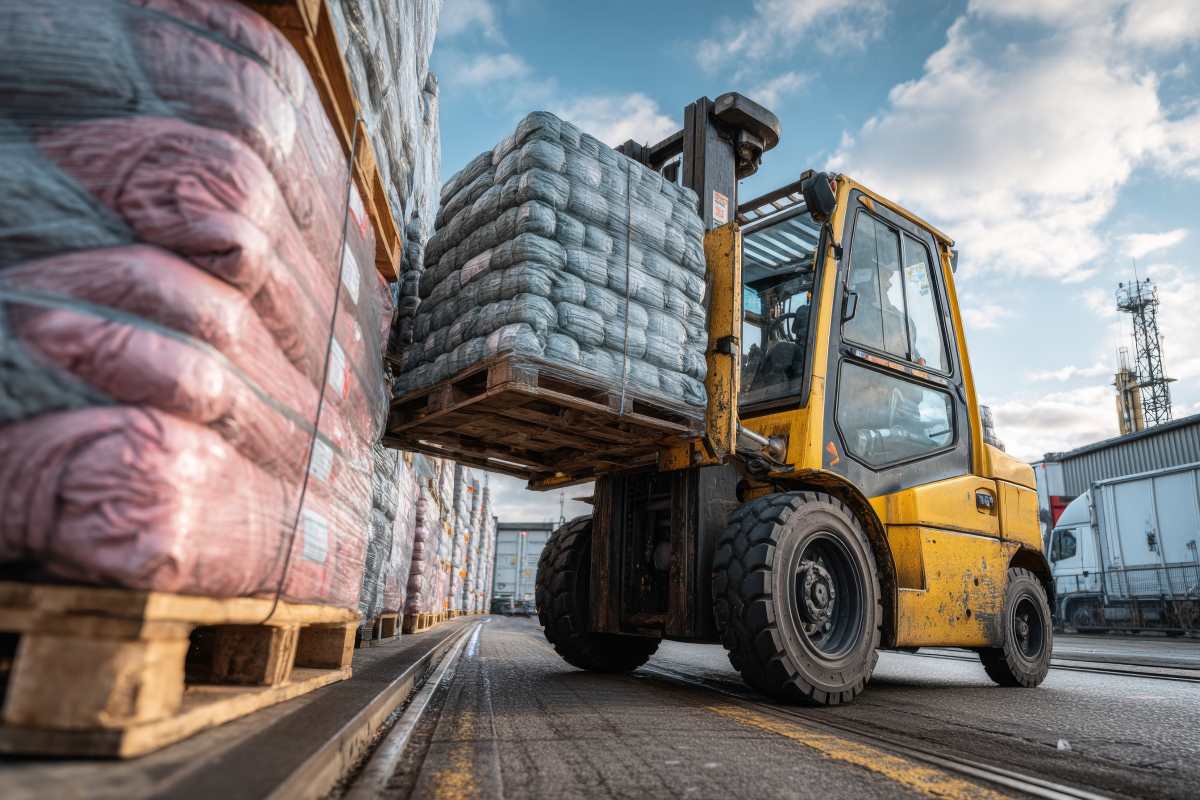
Maintenance is one of the biggest factors in how reliable a forklift fleet will be. When trucks are looked after properly, they last longer, break down less often, and create fewer operational delays. But not all maintenance strategies work in the same way.
Two of the most common approaches are preventive maintenance and predictive maintenance. They sound similar, and both aim to reduce breakdowns, but they are not the same.
Understanding the difference helps businesses decide how to manage cost, downtime, and equipment reliability more effectively.
Why this distinction matters
If a forklift fails in the middle of a shift, the effect is often bigger than the repair itself. One fault can slow loading, delay stock movement, and put extra pressure on the rest of the fleet.
That is why maintenance strategy matters. The goal is not only to fix problems. It is to decide when maintenance should happen so trucks stay safe, available, and cost-effective.
Some businesses rely on fixed service intervals. Others use machine condition data to spot issues earlier. Both approaches can work, but they suit different operations.
What preventive maintenance means
Preventive maintenance is a planned maintenance approach based on time, usage, or a set service schedule.
In simple terms, maintenance is carried out before a failure happens, based on when the truck is due for attention rather than on whether a fault is already showing.
This might include:
- Servicing every set number of hours
- Replacing parts at planned intervals
- Carrying out regular inspections
- Lubricating moving parts on schedule
- Checking brakes, tyres, hydraulics, and batteries as part of routine servicing
The idea is to prevent avoidable failures by dealing with wear before it turns into a breakdown.
What predictive maintenance means
Predictive maintenance uses equipment condition and performance data to help decide when maintenance is actually needed.
Instead of relying only on a fixed timetable, predictive maintenance looks at how the machine is behaving. If the signs show that a component is likely to fail soon, maintenance can be planned before that failure happens.
This may involve monitoring things such as:
- Battery performance
- Brake wear
- Hydraulic pressure
- Operating hours
- Heat, vibration, or unusual performance patterns
The key difference is that predictive maintenance reacts to equipment condition rather than only to the calendar.
The main difference between the two
The simplest way to understand the difference is this:
- Preventive maintenance is done at planned intervals
- Predictive maintenance is done when data suggests it is needed
Both are proactive compared with waiting for a forklift to break down. But preventive maintenance works on assumption, while predictive maintenance works on evidence.
That difference affects cost, timing, and efficiency.
How preventive maintenance helps businesses

Preventive maintenance is still one of the most common and practical ways to manage a forklift fleet.
It works well because it is:
- Easier to plan
- Easier to budget for
- Straightforward to organise across multiple trucks
- Effective at reducing many common breakdowns
For many fleets, regular inspections and servicing are enough to catch wear before it becomes serious.
A strong forklift maintenance routine usually includes daily checks, weekly attention, and scheduled servicing at the right intervals. That alone can prevent a large number of avoidable failures.
The limits of preventive maintenance
Preventive maintenance is useful, but it is not perfect.
One of the biggest limits is that it can sometimes lead to maintenance being done too early. A part may still be working well, but it is replaced because the schedule says it is time.
This can lead to:
- Higher planned maintenance costs
- More scheduled downtime than necessary
- Parts being changed before their useful life is over
It also does not always take account of real operating conditions. A forklift used lightly indoors may not wear in the same way as one used heavily across long shifts.
How predictive maintenance helps businesses
Predictive maintenance can improve efficiency by making maintenance more targeted.
Instead of servicing or replacing parts purely by schedule, the business can act when the equipment shows signs of decline. That may reduce unnecessary servicing while still protecting uptime.
Potential benefits include:
- Better use of parts and labour
- Less unnecessary maintenance
- Earlier fault detection
- Lower risk of sudden breakdowns
- Better long-term cost control
This is especially useful in larger fleets or demanding operations where the cost of downtime is high.
The limits of predictive maintenance
Predictive maintenance also has challenges.
It usually needs more than a simple paper service schedule. To work properly, businesses need access to useful data, monitoring systems, or equipment capable of showing reliable condition trends.
That can mean:
- Higher setup costs
- More technical systems to manage
- A need for better reporting and analysis
- More training for maintenance planning
For some businesses, that level of detail is worth it. For others, a strong preventive plan remains the more practical choice.
Which approach is better for forklifts?
There is no single answer for every fleet.
For many businesses, preventive maintenance is the right foundation. It is practical, proven, and usually easy to organise. Planned servicing, inspections, and operator checks prevent a large number of common forklift problems.
Predictive maintenance becomes more attractive when:
- The fleet is larger
- Equipment use is heavy or variable
- Downtime is especially costly
- The business wants more data-led planning
- Condition monitoring is already in place
In reality, many operations use a mix of both. They keep a preventive servicing schedule in place but also respond to performance data and early warning signs.
Why reactive maintenance is the weakest option
Both preventive and predictive maintenance are stronger than reactive maintenance alone.
Reactive maintenance means waiting until something breaks and then fixing it. While that may seem cheaper in the short term, it often leads to:
- Higher repair bills
- More downtime
- Greater safety risk
- Disruption across the site
- More pressure on other trucks in the fleet
That is why most modern fleet planning aims to move away from a run-to-failure approach.
What businesses should consider before choosing
When deciding how to manage maintenance, it helps to ask:
- How large is the fleet?
- How critical is uptime to daily operations?
- Are the trucks used lightly or heavily?
- Do we already have condition data available?
- Is our main goal lower cost, lower downtime, or both?
A smaller operation with a few forklifts may do very well with a disciplined preventive programme. A larger, high-demand site may gain more from adding predictive methods to that structure.
Why good servicing still matters in both models
Whether a business leans more towards preventive or predictive maintenance, proper servicing remains essential.
Inspections, repairs, parts replacement, and professional servicing are still the practical tools that keep the fleet working. The difference is mostly about when those actions are triggered.
For businesses that need dependable forklift servicing for commercial fleets, the most effective approach is usually one that combines regular care with fast response to early warning signs.
Final thoughts
Predictive and preventive maintenance both aim to reduce forklift downtime, improve reliability, and control costs. The main difference is how they decide when maintenance should happen.
Preventive maintenance follows a planned schedule based on time or usage. Predictive maintenance uses real machine condition data to guide the decision.
For many businesses, preventive maintenance is still the best starting point because it is simple, practical, and effective. Predictive maintenance can add another layer of efficiency where fleets are larger, busier, or more data-driven.
The right choice depends on the operation, but the core principle stays the same: planned maintenance is almost always better than waiting for a breakdown.

Related Posts

The True Cost of Delaying a Forklift Repair
How Forklift Rentals Help Warehouses Stay Flexible
Top Industries that Benefit from Forklift Hire
How Warehousing Demands Are Changing Forklift Requirements
How to Determine If You Need an Extra Forklift