On this page
A load of paving slabs arrives at a construction site following a night of unusually heavy rain. The lorry can park on the hardstanding, but the slabs are required at the far end of a compacted haul road. The task effectively comes down to two questions. Can the forklift lift the slabs securely, and can it transport them along the route in its present condition?
All-terrain forklifts, often called rough terrain forklifts in the UK, are built to transport loads across suitable uneven outdoor surfaces. They are useful on construction sites, farms and builders’ merchants’ yards, where materials frequently move between delivery vehicles, storage areas and locations where they are needed. This outlines what these trucks are capable of, where they are typically used and what to assess before choosing one.
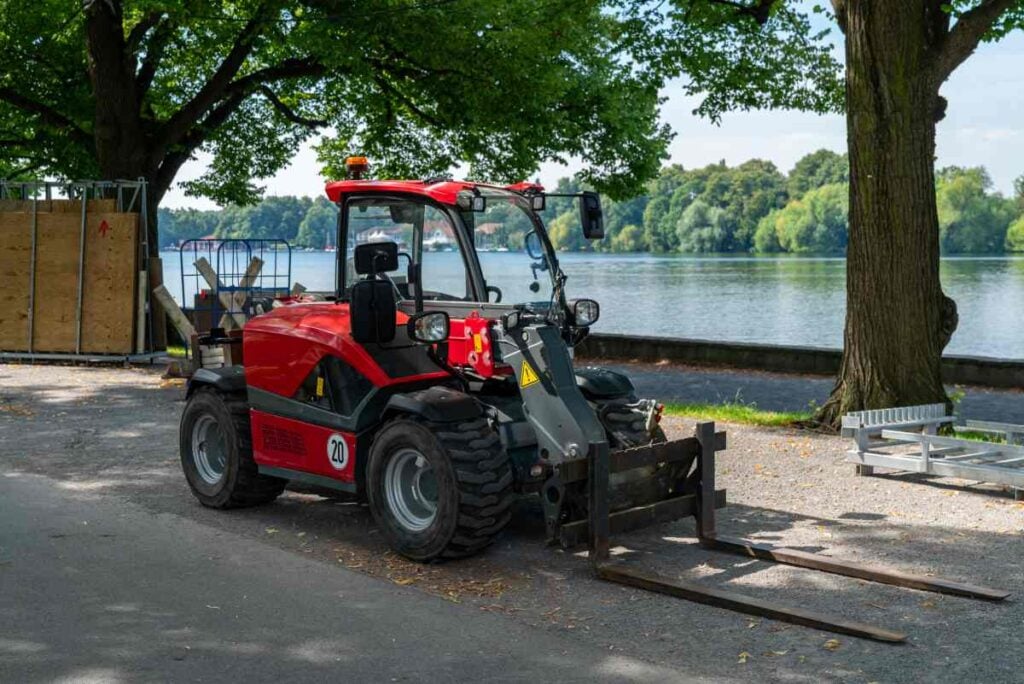
What is an all-terrain forklift used for?
An all-terrain forklift combines a standard lifting mast and forks with a chassis and tyres engineered for outdoor movement. At the front of the truck, the mast lifts and lowers the load, while the chassis provides increased clearance over uneven terrain. Depending on the model, features may include deep-tread tyres, four-wheel drive and an enclosed cab for operators who spend most of the day working outdoors.
A mast forklift is ideal for collecting a pallet, transporting it across a yard and placing it down nearby. A telehandler has an extending boom, making it potentially more suitable when the load needs to be positioned beyond an obstacle or some distance from the machine. Begin by establishing how far the forks must reach at each end of the task.
Main capabilities of all-terrain forklifts
Traction on loose surfaces
Larger tyres with deep treads help the truck retain traction on suitable surfaces, including compacted gravel or hardcore. Some models feature four-wheel drive, which can help when the route contains loose sections or transitions between different surfaces. Tyre condition remains important throughout the hire period or working season. In yards where vehicles frequently travel over sharp stones or scrap, checking the tyres before use can identify damage before the truck begins operating.
Ground clearance for uneven routes
Higher ground clearance creates more space between the truck’s underside and small variations in ground level. This can be helpful, for instance, when travelling between a prepared site road and a storage area. Nevertheless, the route must still be capable of supporting the truck and its load. Deep ruts, potholes and unstable road edges can all compromise stability. A route that was suitable on Friday may require another assessment on Monday following heavy rain or vehicle movements during the weekend.
Lifting capacity and mast options
When comparing trucks, take into account the heaviest load you actually handle, its dimensions and the height at which it needs to be placed. A long pallet can move the centre of gravity farther from the fork face, which may reduce the weight the truck can safely lift. The selected mast and attachments can also influence the available capacity. Check the data plate for the truck in its configured state and verify that it covers the required load weight, load centre and lift height. When calculating the total weight, remember to include the pallet and its packaging.
Attachments for repetitive tasks
A sideshift enables the operator to move the forks sideways to align them with a pallet. A fork positioner may be helpful on sites that routinely handle pallets of different widths. Both attachments can save time in a busy yard, as long as the attachment is approved for the truck, the capacity information corresponds to the installed configuration and the operator has received appropriate training. Providing your supplier with the dimensions of the pallets you usually use helps determine whether either option would offer a practical benefit.
Typical applications for all-terrain forklifts
Construction and civil engineering
Rough-terrain forklifts can unload palletised bricks, blocks, bagged materials and paving in a suitable unloading area, then transport them along prepared routes to storage or work areas. They are especially useful while roads and yards are still being surfaced. On a changing site, agree on delivery and set-down locations beforehand so crews can keep the route clear of excavations, stored materials and pedestrian activity.
Builders’ merchants and outdoor storage yards
A merchant may receive bulk deliveries from suppliers in the morning and fulfil smaller customer orders throughout the day. An all-terrain forklift can transport product packs between delivery bays, outdoor storage areas and collection points when the yard surface requires additional traction or clearance. For sites with narrow aisles or regular travel through doorways, compare the truck’s turning radius, width and lowered mast height with the available space.
Agriculture and horticulture
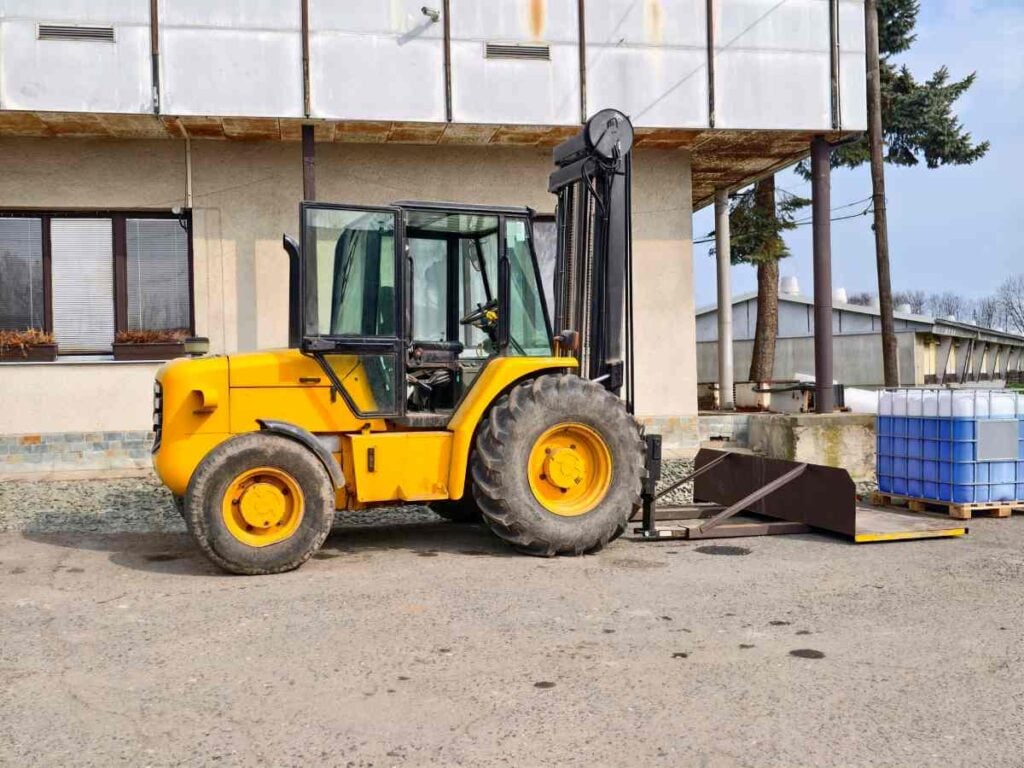
Farms and nurseries can use rough-terrain forklifts to handle palletised feed, seed, plant trays and boxed produce across suitable farmyards and prepared tracks. Demand may be highest when deliveries coincide with planting or harvest periods. Measure access to sheds and covered storage areas, and confirm that ventilation and the power source are suitable wherever the truck will operate indoors. If your workload varies by season, provide your supplier with details of the busiest period as well as the typical working day.
Recycling yards and temporary sites
On suitable routes at recycling sites, a rough-terrain forklift can transport securely palletised materials or compatible stillages between sorting, storage and loading areas. At temporary sites such as outdoor events, it can move palletised flooring or supplies during set-up and breakdown. In both situations, route conditions can change rapidly. Before each work period, check for debris, surface damage and changes in pedestrian movements.
Choosing the right truck for your site
Walk the route from collection to set-down and use details of a typical lift to brief your supplier. Four categories of information are particularly useful:
- Ground conditions. Outline the surface type, drainage, slopes, and any locations that become soft following rain.
- Load details. State the maximum weight and dimensions, the pallet type, and any unusual distribution of weight.
- Lift and access requirements. Confirm the placement height, doorway clearance, turning area, and any reach required beyond the fork face.
- Work pattern. Describe how frequently the truck will be used, how long it will be required, and whether it will travel between indoor and outdoor areas.
Assess where the truck will turn while carrying its largest load on the forks. An aisle that appears roomy when the truck is stationary may provide substantially less space when a long pallet swings around a corner.
Operating safely on uneven ground
Create firm, well-drained travel routes and, wherever practicable, separate pedestrians from operating areas. HSE guidance identifies soft ground, slippery surfaces, steep slopes, and travelling with raised loads as factors that may contribute to overturning. Observe the manufacturer’s operating limits and reassess the route after severe weather or site changes. Plan lifting and loading on appropriate level ground, and keep the load low while travelling.
Operators require training suited to the truck and any attachment they will use, as well as familiarisation with the site and its procedures. A driver transferring from a warehouse counterbalance truck to a rough terrain model may require conversion training. Include tyres, forks, steering, brakes, and restraints in pre-use inspections, in accordance with the manufacturer’s instructions and site procedures.
Choose the perfect all-terrain forklift with Acclaim Handling
Acclaim Handling provides short- and long-term rough terrain forklift hire, offering equipment tailored to your site conditions and load requirements. Whether you need a forklift for a single contract or an entire project, provide your heaviest load, required lift height and site details so the team can help select the right truck for the work.
Call 01708 861 414 to discuss your needs and obtain a hire quotation, or contact Acclaim Handling online.
All-terrain forklifts at a glance
| Area | Summary | Key checks |
| Traction and clearance | Deep-tread tyres, increased ground clearance and, on some models, four-wheel drive support outdoor travel. | Assess ground support, ruts, slopes and route conditions, especially after rain. |
| Lifting and reach | A mast and forks handle pallets; a telehandler may suit tasks requiring extended reach. | Check the configured data plate against load weight, load centre and lift height. |
| Attachments | Sideshift helps pallet alignment; fork positioners suit different pallet widths. | Confirm attachment approval, capacity information and operator training. |
| Typical applications | Construction, builders’ merchants, agriculture, horticulture, recycling yards and temporary sites. | Use suitable prepared routes and check access, debris and pedestrian movements. |
| Choosing a truck | Match the machine to ground conditions, loads, lift and access requirements, and work pattern. | Brief the supplier on the heaviest load, placement height, turning space and indoor use. |
| Safe operation | Plan lifting on appropriate level ground, keep loads low during travel and separate pedestrians wherever practicable. | Follow manufacturer limits, provide suitable training and carry out pre-use inspections. |