On this page
- Yet can a forklift really tow?
- Are Forklifts Built for Towing?
- Lifting Capacity Is Not Towing Capacity
- What Does UK Safety Guidance Require?
- Use the Correct Coupling
- Check the Route Before Moving
- Braking and Vehicle Condition Matter
- Do Operators Need Additional Training?
- How do you recover a broken-down forklift?
- When is a tow tractor the better choice?
- Forklift Towing: Summary
Warehouses, factories and distribution centres rely on forklifts to lift and move goods throughout the day. Since a powerful truck is already on hand, using it to pull a trailer or move wheeled equipment looks like an easy time-saver.
Yet can a forklift really tow?
Certain forklifts can tow, as long as the manufacturer allows it and the truck, coupling, trailer and conditions are appropriate. Being powerful enough to move an object does not make the operation safe.
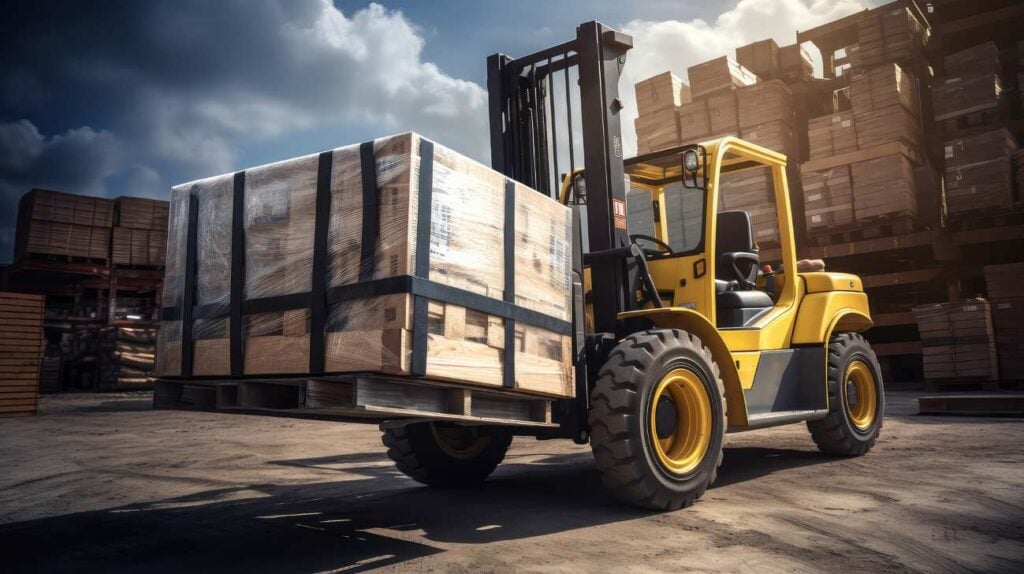
Before you add towing to your handling tasks, you must understand the equipment’s limits, assess the risks and make sure operators are properly trained.
Are Forklifts Built for Towing?
A forklift’s primary role is lifting and moving loads on its forks or approved attachments. Whether it can also tow depends on its design and the manufacturer’s instructions for that model.
Some manufacturers allow occasional trailer towing under fixed conditions. Others may reserve a coupling or pin for recovering the forklift after a breakdown. These are distinct applications, so a towing point should never be read as automatic permission to pull trailers.
For instance, a STILL RCD 15–20 manual on Acclaim Handling’s website allows occasional trailer towing within a set operating-time limit, with manufacturer consultation required for more frequent use. That permission covers the equipment in the manual; it is not a general rule for forklifts. acclaimhandling.co.uk
Consult the correct manual for your truck and request written clarification where towing instructions are missing or unclear.
Lifting Capacity Is Not Towing Capacity
A common error is assuming a forklift rated to lift 2,500kg can tow a 2,500kg trailer. Its lifting rating gives no such information.
Lifting capacity is the load the forks can support under specified conditions. Towing generates different forces through the coupling and chassis, especially when braking, cornering and on gradients.
Any approved towing setup must account for the loaded trailer’s total mass, coupling limits, braking provision and operating conditions.
A truck may tow a trailer on level ground but still lack approved capability to control it safely elsewhere. Never base a towing limit on the forklift’s lifting capacity, physical size or engine power. Get the relevant limits from the manufacturer for the intended application.
What Does UK Safety Guidance Require?
In Great Britain, the Provision and Use of Work Equipment Regulations 1998 (PUWER) require work equipment to suit its intended use. Employers must also maintain it and provide adequate information, instruction and training. www.hse.gov.uk
For towing, this means considering the whole operation. A suitable forklift alone cannot make an unsuitable trailer, damaged coupling or hazardous route acceptable.
The assessment should establish whether the proposed combination can operate safely in the actual workplace. Manufacturer approval supports that decision but does not replace the employer’s duty to assess local risks.
Even a short journey or occasional task still needs suitable equipment and controls. “We only need to move it a few metres” does not justify an improvised arrangement.
Use the Correct Coupling
Where towing is permitted, use the coupling arrangement specified or approved for the truck and trailer. Confirm its rating, compatibility and locking method before use.
Do not improvise by wrapping a chain around the forks, tying a rope to the mast or fitting an unapproved tow ball. An attachment fitting physically does not guarantee that it is suitable.
Inspection should include the coupling, retaining parts, mounting points and trailer drawbar. If damage, excessive wear or missing locking parts are found, do not use the equipment until the issue is properly fixed.
Safe procedures are also required for connecting and disconnecting. Both units must be secured against unexpected movement, and people kept clear of trapping points. No one should stand between moving equipment to guide a coupling into place.
Check the Route Before Moving
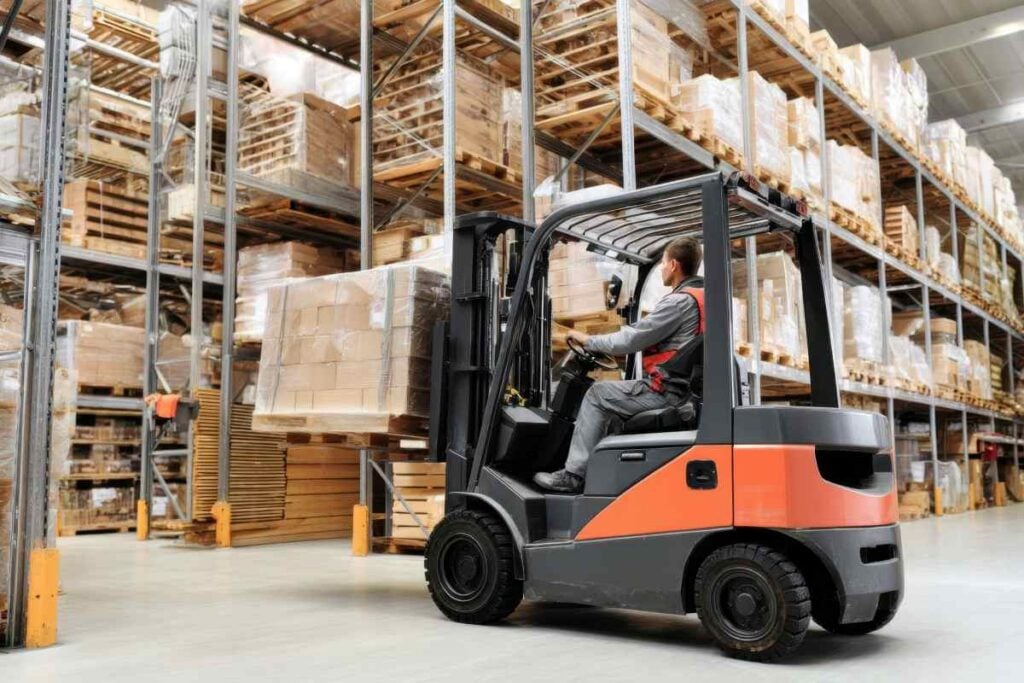
Towing alters the space needed to travel and turn. A route suitable for a forklift alone may not work with a trailer attached.
HSE’s traffic route guidance lists surfaces, slopes, bends, junctions and obstructions as factors to assess. When planning a towing operation, consider:
- Ground conditions: potholes, debris, slippery surfaces and uneven transitions.
- Gradients: whether the approved combination can travel and stop safely.
- Clearance: enough room for the trailer during turns and at doorways.
- Other traffic: interactions with pedestrians, vehicles and loading activities.
- Visibility: whether the operator can safely monitor the route and the trailer. www.hse.gov.uk
A practical route review should identify where people could enter the trailer’s path. Where possible, plan movements to minimise reversing and keep pedestrians separated from the operation.
Braking and Vehicle Condition Matter
Moving a trailer is only one part of the task. The combination must also stop, stay controlled and remain secure when parked.
Check the manufacturer’s requirements for trailer brakes and any relevant restrictions. Do not assume the forklift’s brakes can handle an extra unbraked load.
The forklift and trailer both need proper maintenance and checks. Tyres, steering, brakes, wheels and coupling parts all affect control. Trailer faults deserve as much attention as truck faults.
The load must also be suitable and secured against dangerous shifting. If the trailer’s weight, load distribution or condition is unknown, establish these facts before deciding whether to proceed.
Do Operators Need Additional Training?
Forklift training does not automatically cover all towing activities. Operators need instruction suited to the specific truck, trailer and task.
HSE’s training guidance explicitly includes attachments and towed equipment for self-propelled work equipment. Employers should therefore decide what extra training and familiarisation are needed before authorising towing. www.hse.gov.uk
Relevant topics include coupling procedures, route restrictions, turning behaviour, safe parking and recognising unsuitable conditions. Operators also need clear instructions on reporting defects and stopping work.
Supervisors should also know the approved limits. A safe procedure only works when production pressures do not push staff to bypass it.
Acclaim Handling can discuss operator training requirements alongside your wider materials handling needs.
How do you recover a broken-down forklift?
Recovering a disabled forklift is not the same as using one to pull a trailer. The recovery arrangements depend on the truck’s design and its condition.
A breakdown may affect the steering, the braking or the transmission. Follow the recovery instructions for the specific model and get competent help instead of attempting an improvised tow.
Equally, being allowed to tow a forklift during recovery does not mean its recovery point is approved for routine trailer work.
This article covers workplace operations. Any proposed use on a public road requires a separate assessment of the vehicle, driver, insurance and road-use requirements.
When is a tow tractor the better choice?
If towing is a regular part of your operation, consider equipment built for that purpose. For repeated trailer movements, production supply or distribution tasks, a tow tractor may suit you better.
Compare the approved towing capacity, braking systems, routes, trailer compatibility and duty cycle. It is also worth asking whether dedicating equipment to towing would free up forklifts for lifting work.
Put the agreed arrangement in writing so everyone knows which truck and trailer may be paired. If the trailer, load, route or frequency changes, review that decision before continuing. A setup assessed for occasional movements on a level indoor floor should not simply be moved to a busy outdoor yard without checking the new conditions.
The right choice starts with the task. How much needs moving, how often, and along which route? Answering these questions helps stop a convenient workaround from becoming a permanent process without proper review.
For help assessing your requirements, contact Acclaim Handling. Talking about your equipment, loads, and working environment is the first step toward a suitable materials handling solution.
Forklift Towing: Summary
| Area | Key takeaway |
| Manufacturer approval | Tow only where the specific truck’s manufacturer permits it. A recovery point is not automatic permission to pull trailers. |
| Capacity and braking | Lifting capacity is not towing capacity. Confirm loaded trailer mass, coupling limits, braking requirements and operating restrictions. |
| Risk assessment | Assess the complete truck-and-trailer combination and workplace conditions, even for short or occasional movements. |
| Coupling and condition | Use an approved, compatible coupling. Check both units, secure the load and follow safe connecting and disconnecting procedures. |
| Route planning | Check surfaces, gradients, turning clearance, visibility and other traffic. Minimise reversing and separate pedestrians where possible. |
| Operator training | Provide task-specific instruction and familiarisation before authorising towing, with clear limits and defect-reporting procedures. |
| Breakdown recovery | Follow model-specific recovery instructions and seek competent help. Recovery and routine trailer towing are different operations. |
| Regular towing | Consider a tow tractor for repeated movements. Record approved combinations and review them when loads, routes or frequency change. |