On this page
- Why a maintenance audit matters
- Start by reviewing your maintenance goals
- Check whether daily inspections are happening properly
- Review planned servicing intervals
- Audit maintenance records properly
- Look for repeat problems across the fleet
- Assess downtime, not just repair invoices
- Check whether faults are being fixed early enough
- Review the quality of external support
- Compare the programme against manufacturer guidance
- Turn audit findings into actions
- Final thoughts
A forklift maintenance programme should do more than keep trucks running when they happen to break down. It should help your business reduce downtime, protect safety, control repair costs, and extend the working life of the fleet.
The problem is that many businesses assume their maintenance programme is working well simply because service visits are happening. That is not always enough. If inspections are inconsistent, records are poor, or faults keep returning, the programme may not be delivering what the business actually needs.
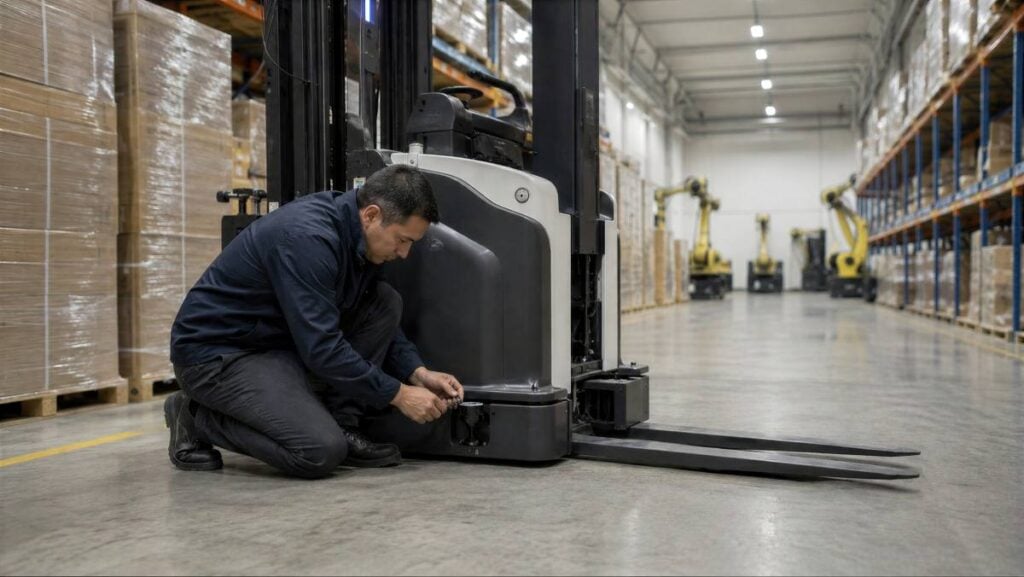
That is why regular auditing matters. A forklift maintenance audit helps you step back and ask a simple question: is the current maintenance approach really protecting the fleet and supporting the operation?
Why a maintenance audit matters
A forklift may still be in use every day and still have weaknesses in the way it is maintained. Those weaknesses often show up as:
- Repeat faults
- Rising repair costs
- More unexpected breakdowns
- Poor maintenance records
- Inconsistent daily checks
- Trucks spending too much time off the floor
A proper audit helps you identify those gaps before they turn into bigger operational problems.
It also gives you a clearer view of whether your current forklift maintenance programme is based on prevention or simply reacting to faults after they happen.
Start by reviewing your maintenance goals
Before checking records or equipment, it helps to be clear about what the maintenance programme is meant to achieve.
For most businesses, the main goals are usually:
- Keeping forklifts safe to use
- Reducing avoidable downtime
- Extending equipment life
- Controlling repair spend
- Supporting compliance and inspection readiness
If your current programme is not clearly linked to those goals, the audit may already show the first issue. Maintenance should be measured against business outcomes, not only whether an engineer attended site.
Check whether daily inspections are happening properly
Daily checks are the first line of defence in any forklift maintenance programme.
An audit should ask:
- Are operators completing checks every day?
- Are the checks recorded clearly?
- Are defects being reported quickly?
- Is there evidence that reported faults are followed up?
A business may have a daily checklist on paper, but that does not always mean it is being used properly. If operators are rushing the process or records are incomplete, early warning signs can be missed.
Daily inspections should cover obvious areas such as tyres, forks, brakes, steering, warning devices, leaks, and any visible damage. If these checks are weak, the whole programme becomes weaker with them.
Review planned servicing intervals
The next step is to look at the formal servicing schedule.
Ask questions such as:
- Are trucks being serviced at the right intervals?
- Are service visits based on hours, time, or both?
- Does the schedule reflect actual usage?
- Are high-use trucks getting enough attention?
A planned maintenance programme should not be random. It should follow manufacturer guidance, operating conditions, and usage patterns.
If the same service interval is being used for every forklift without considering how hard each truck is working, the programme may not be balanced properly.
Audit maintenance records properly
Good records are one of the clearest signs of a healthy maintenance programme.
You should be able to see:
- Service dates
- Work completed
- Parts replaced
- Defects reported
- Follow-up repairs
- Recurring faults
- Inspection history
If records are missing, inconsistent, or difficult to review, that makes it harder to manage the fleet properly. It also creates problems for compliance and internal accountability.
A maintenance audit should not only confirm that records exist. It should confirm that they are useful.
Look for repeat problems across the fleet
One repair in isolation may not mean much. A pattern matters more.
During the audit, check whether the same faults keep appearing, such as:
- Battery issues
- Brake wear
- Hydraulic leaks
- Steering faults
- Tyre damage
- Mast or chain wear
If the same problem keeps returning, it may point to a wider issue in the programme. That could include poor servicing quality, the wrong operating practices, missed inspections, or trucks being worked beyond what they can comfortably handle.
Repeat problems usually cost more in the long run than one larger repair done properly the first time.
Assess downtime, not just repair invoices

Many businesses look at repair cost first, but downtime often tells a more important story.
A forklift that is constantly off the floor can slow:
- Loading and unloading
- Warehouse replenishment
- Production support
- Dispatch schedules
That means a truck with modest repair bills may still be hurting the business if it keeps disrupting operations.
A strong audit should look at:
- How often each truck is unavailable
- How long repairs usually take
- Whether breakdowns are rising
- Which trucks are causing the most disruption
This helps you judge the programme based on operational impact, not only maintenance spend.
Check whether faults are being fixed early enough
One of the biggest warning signs in a poor maintenance programme is delayed action.
An audit should ask:
- Are small issues being dealt with early?
- Or are trucks staying in service until faults become serious?
- Are operators confident reporting faults?
- Are reported problems being prioritised correctly?
If trucks are staying in use with known issues, that can quickly increase both repair costs and safety risk.
The purpose of a strong maintenance programme is to catch faults early, not to stretch them until failure.
Review the quality of external support
If your servicing is outsourced, the audit should also review the service provider, not just the trucks.
Useful questions include:
- Are service visits thorough and consistent?
- Are recommendations clear?
- Is response time acceptable when urgent repairs are needed?
- Are maintenance reports detailed enough?
- Is the provider helping prevent issues or only reacting to them?
This matters because a maintenance programme is only as strong as the people delivering it. If support is too basic or too reactive, the programme may look active without being effective.
For businesses that need dependable forklift servicing and preventative maintenance, the quality of engineering support is a major part of what the audit should measure.
Compare the programme against manufacturer guidance
A useful audit should also compare current maintenance practice against manufacturer recommendations.
This helps confirm whether the business is:
- Servicing often enough
- Using the right checks and replacement points
- Following the correct approach for each truck type
Manufacturer guidance is not always the only factor, because site conditions and hours of use matter too, but it is still a strong benchmark.
If your current programme falls below those standards, that should be treated as a clear warning sign.
Turn audit findings into actions
An audit only adds value if the findings lead to change.
At the end of the review, you should be able to identify:
- What is working well
- Where records need improvement
- Which trucks need closer attention
- Whether servicing intervals need adjusting
- Whether operators need stronger daily-check routines
- Whether the current provider is meeting the standard required
This turns the audit from a paper exercise into a practical maintenance improvement plan.
Final thoughts
Auditing your forklift maintenance programme is one of the best ways to see whether your fleet care is actually protecting uptime, safety, and cost control.
The most useful audits look at daily checks, service intervals, maintenance records, repeat faults, downtime, and provider quality together. When those areas are reviewed properly, it becomes much easier to see whether the programme is proactive, consistent, and fit for the demands of the operation.
A good maintenance programme should not only keep forklifts moving. It should help the whole business work with fewer interruptions and fewer avoidable repair costs.