On this page
- What Makes a Warehouse Future-Ready?
- 1. Establish Visibility Before Adding Capacity
- 2. Build a Fleet That Matches Changing Workloads
- 3. Plan your space so that movement flows easily and flexibility is maintained
- 4. Bring In Automation Where It Addresses a Clear Problem
- 5. Plan Energy Use in Parallel with Equipment Investment
- 6. Strengthen Reliability Through Planned Maintenance
- 7. Enable People to Manage Change
- Build Adaptability into Your Next Decision
- Summary: Seven Priorities for a Future-Ready Warehouse
Warehouses have to reconcile competing priorities: moving goods faster, keeping costs in check, using space efficiently and adapting as circumstances shift. A sudden surge in orders, a late delivery or a new customer contract can rapidly reveal weaknesses in an operation built around predictable workloads.
Warehousing that is ready for the future means building the ability to adapt. It brings together appropriate materials handling equipment, dependable information, flexible processes and skilled staff to keep goods flowing as requirements change.
For UK businesses, the first step is to identify where flexibility will deliver the greatest benefit. From reviewing forklift utilisation to introducing targeted automation, practical improvements can boost day-to-day performance while readying the warehouse for its next challenge.
What Makes a Warehouse Future-Ready?
A future-ready warehouse can absorb change without having to repeatedly rebuild its entire operation. Its layout, equipment and working practices support current activity while leaving room for different products, higher volumes or new fulfilment requirements.
Adaptability also means recognising that demand will not always rise. Businesses must cope with quieter periods without incurring unnecessary costs, then scale up capacity when activity returns.
Consider a distributor that takes on a contract involving smaller, more frequent orders. Storage capacity may remain sufficient, but picking, replenishment and dispatch requirements could change considerably. Adding another forklift will only help if vehicle availability is the actual constraint.
The priority is to identify how goods move through the building and where changing demand creates pressure.
1. Establish Visibility Before Adding Capacity
Effective adaptation begins with accurate information. Without a clear view of stock, equipment availability and order progress, managers may respond to symptoms while overlooking the underlying problem.
A warehouse management system can help with inventory visibility and task coordination, as long as stock movements are recorded consistently. Barcode scanning and clear location labelling help keep physical activity in line with system records.
Information about equipment provides another angle. Operating hours, downtime and repair history can show whether trucks are underused, overworked or poorly suited to certain tasks.
Look at these measures alongside operational indicators such as order accuracy, dispatch performance and waiting time. If trucks frequently queue at a loading bay, the problem may lie in scheduling or staging space rather than in fleet size.
Better visibility gives businesses a firmer basis for deciding what to change and where to invest.
2. Build a Fleet That Matches Changing Workloads
Materials handling needs can differ considerably between routine operations and peak trading periods. A fleet sized for maximum demand all year round may leave equipment sitting idle during quieter months.
A practical approach is to separate core capacity from temporary requirements. Owning equipment or entering longer-term arrangements may suit predictable workloads, while short-term hire can cover seasonal peaks, projects or replacement needs.
Choosing the right trucks matters just as much. Counterbalance forklifts, reach trucks, powered pallet trucks and stackers each fulfil different roles. Selecting equipment based on load characteristics, lift heights, travel distances and operating conditions helps avoid compromises that harm productivity.
Acclaim Handling offers equipment sales, hire and fleet management services, giving businesses options when reviewing how their materials handling capacity is supplied and supported.
Review the mix regularly, especially when contracts, shift patterns or stock profiles change.
3. Plan your space so that movement flows easily and flexibility is maintained
Storage density is just one way to gauge how effective a warehouse is. Adding more pallet positions can cause issues if it limits access, makes replenishment harder or leaves too little space for dispatch activities.
A flexible layout takes into account the whole journey from goods-in through storage, picking and loading. Fast-moving products should be placed to cut unnecessary travel, and staging areas need enough capacity for realistic operating conditions.
Review layouts whenever product ranges change. A layout that works well for full-pallet movements may perform poorly once picking individual items becomes more important.
Any proposed changes should be checked against equipment dimensions, load requirements, pedestrian routes and building constraints. Adjustable storage arrangements can accommodate future changes, but modifications still need proper design and assessment.
The goal is usable capacity: space that supports efficient, controlled movement throughout the working day.
4. Bring In Automation Where It Addresses a Clear Problem
Automation can improve consistency in the right applications, but investment should start with a specific operational need. Repetitive movements between fixed locations may offer a clearer opportunity than activities with frequent exceptions.
Begin by documenting the task: volumes, distances, shift patterns, handover points and delays. Assess whether the process is consistent enough and whether the surrounding infrastructure can support the proposed system.
A phased project lets businesses test performance before expanding. For instance, a defined pallet transfer route could serve as an initial application, with results measured against an agreed baseline.
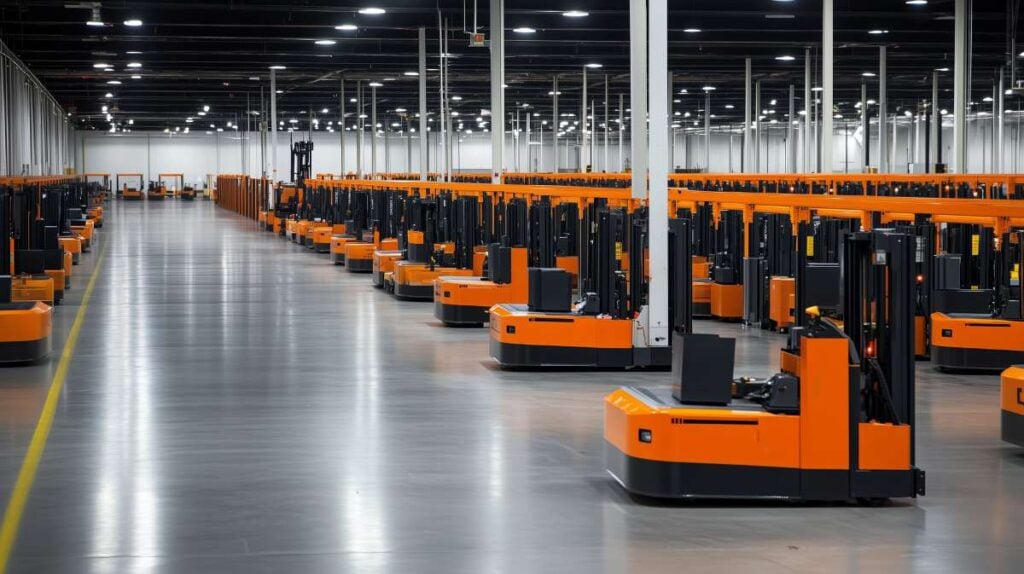
Acclaim Handling provides warehouse automation solutions, including automated trucks and autonomous mobile robots, with planning built around existing manual operations.
Effective implementation also relies on integration, staff training, and plans for managing interruptions. The business case should cover these requirements, together with equipment costs and potential labour savings.
5. Plan Energy Use in Parallel with Equipment Investment
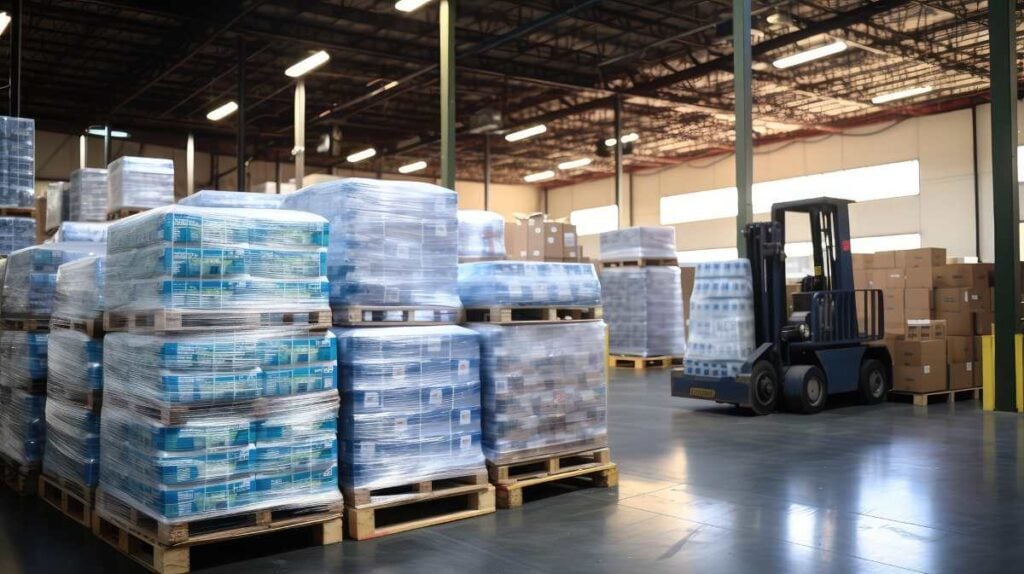
Energy planning merits consideration when you are reviewing an electric forklift fleet. Battery capacity, charging arrangements, and shift requirements must be coordinated to support the operation.
Determine when trucks are needed, when charging can occur, and whether the building’s electrical infrastructure can handle the proposed demand. Adding to a fleet without accounting for charging capacity can create a new bottleneck.
Different battery options are suited to different applications. Selection should take into account duty cycles, available charging windows, operating temperatures, maintenance requirements, and whole-life costs.
Sustainability gains can also arise from using existing resources more effectively. Eliminating empty journeys, reducing avoidable product damage, and matching equipment to the task can cut waste while supporting productivity.
Measure performance against a meaningful baseline. For instance, energy consumption per pallet moved may offer more useful insight than an electricity bill viewed without reference to throughput.
6. Strengthen Reliability Through Planned Maintenance
An adaptable warehouse requires dependable equipment. When essential trucks become unexpectedly unavailable, the effects can ripple through receiving, replenishment, and dispatch.
Maintenance planning should reflect operating intensity and the condition of equipment. A machine working across multiple shifts may require a different service schedule from one used only occasionally.
Maintenance logs can be useful for spotting recurring faults and guiding decisions about replacements. However, maintenance planning should also consider the operational impact of failure: which tasks rely on a single machine, and what alternatives exist?
Acclaim Handling’s fleet management and maintenance services can help businesses with equipment records, servicing and performance reviews. Acclaim
Settling support arrangements before problems occur gives managers a clearer idea of how they will respond. Preventive work, adequate spare capacity and access to replacement equipment can all help maintain continuity.
7. Enable People to Manage Change
Technology and equipment deliver their best results when employees know how to use them effectively. Operators and supervisors also offer valuable insight into delays, awkward handovers and recurring problems.
Bring them in early when assessing changes. Practical feedback can uncover issues that a layout drawing or performance report will not capture.
Training should reflect the equipment, the tasks and the working environment. Bringing in new systems also calls for clear instructions, chances to practise and support during the transition.
Make contingency planning part of routine management. Teams should understand how priorities change during disruption and how to report problems promptly.
Simple scenario exercises can reveal gaps before they affect customers. Consider how the warehouse would respond to an unavailable loading bay, a delayed inbound shipment or a system outage. Assign responsibilities and confirm which activities can continue while the issue is being resolved.
Build Adaptability into Your Next Decision
Warehousing that is ready for the future grows out of smart, connected improvements. Start with a single constraint, establish a baseline, and evaluate whether the proposed change benefits the broader operation.
Whether you need a flexible hire for the next step, a fleet review, maintenance support or targeted automation, Acclaim Handling can help businesses explore materials handling solutions that fit their needs.
Get in touch with Acclaim Handling to talk through your operation and pinpoint practical opportunities to prepare your warehouse for change.
Summary: Seven Priorities for a Future-Ready Warehouse
| Priority | Practical action | Key takeaway |
| Visibility | Track stock movements, order progress, equipment use and downtime. | Identify the real constraint before adding capacity. |
| Fleet flexibility | Separate core capacity from temporary needs and match trucks to tasks. | Adapt to peaks without retaining unnecessary equipment. |
| Space and flow | Review goods-in, storage, picking and dispatch together. | Prioritise usable capacity and efficient movement. |
| Targeted automation | Define a repeatable task, test a phased solution and measure against a baseline. | Address a clear operational problem before expanding. |
| Energy planning | Coordinate battery choice, charging capacity and shift requirements. | Avoid charging bottlenecks and assess energy use against throughput. |
| Planned maintenance | Use equipment condition, operating intensity and fault records to plan servicing. | Support reliability and prepare alternatives for critical equipment. |
| People and change | Involve operators early, provide practical training and test disruption scenarios. | Help teams manage new processes and maintain continuity. |