On this page
In today’s fast-paced warehouse and industrial environments, productivity is pretty much everything. Businesses are under a constant pressure to move their goods faster, safer, and more cost-effectively – all of this without compromising on safety or compliance. The increasing operational costs, labour shortages, and customers knowing exactly what they want, mean that efficiency is no longer a “nice to have”, but a critical part of staying competitive.
One of the most functional and yet often overlooked ways to improve forklift efficiency is through the use of forklift attachments. While many operations rely solely on just the standard forks, this can significantly limit what a forklift truck is capable of achieving, and may mean you aren’t using your investment to its full potential. Forklift attachments allow businesses to adapt existing equipment to suit specific applications, materials, and workflows – often delivering an immediate productivity gain without the need to invest in additional trucks.
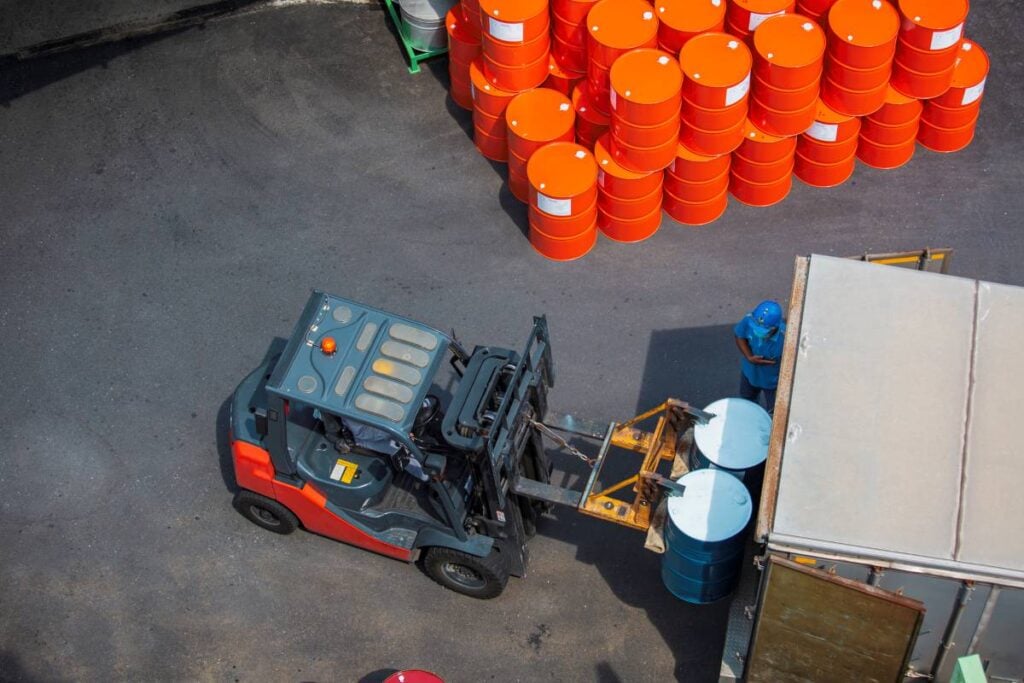
Forklift attachments allow a single truck to perform multiple tasks, which in the end shows a reduction in downtime, manual handling, and the need for additional equipment. For warehouses, factories, and distribution centres across the UK, the right attachment can deliver measurable productivity gains almost immediately, while also improving safety and reducing damage.
At Acclaim Handling, every single day we are working with businesses to make sure that their fleets are set up in a way that allows them to work smarter, not harder. In this guide, we are going to look into the most effective forklift attachments, how they improve productivity, and what you should be considering before you make the investment.
What Are Forklift Attachments?
Forklift attachments are accessories fitted to a forklift truck to enhance or change its functionality. Rather than relying solely on standard forks, attachments allow operators to handle different load types, materials, and environments more efficiently and safely.
Attachments are commonly used to tailor a forklift to a specific operation, such as handling non-palletised goods, managing awkward or fragile loads, or speeding up repetitive tasks. When selected and installed correctly, they can transform a forklift from a general-purpose truck into a highly specialised productivity tool.
Common uses include:
- Handling non-palletised or irregular loads
- Improving load stability and control
- Reducing manual handling and operator strain
- Speeding up repetitive loading and unloading tasks
- Minimising product damage and waste
When selected correctly, forklift attachments can significantly increase throughput while maintaining safety, compliance, and operator confidence. However, it’s important to understand that attachments also affect forklift capacity and handling, which is why professional assessment and training are essential.
Side Shifters
How They Boost Productivity
Side shifters are one of the most popular and widely used forklift attachments – and it’s all for good reason. They allow the forks to move laterally (side to side) without having to reposition the entire forklift truck. This small adjustment can save seconds on every load, which quickly adds up across a shift, a week, or an entire year.
Instead of reversing, steering, and re-aligning the truck, operators can fine-tune fork position hydraulically from the cab. This leads to smoother, faster pallet placement and retrieval, especially in tight or high-volume environments.
Ideal Applications
- Narrow aisle warehouses
- High-density racking systems
- Operations with frequent pallet placement and retrieval
Productivity Benefit
- Faster and more accurate load alignment
- Reduced operator fatigue from repeated manoeuvring
- Less wear on tyres, steering components, and floors
- Improved pallet positioning, reducing rack and load damage
For many operations, side shifters quickly pay for themselves through time savings and reduced damage alone.
Fork Positioners
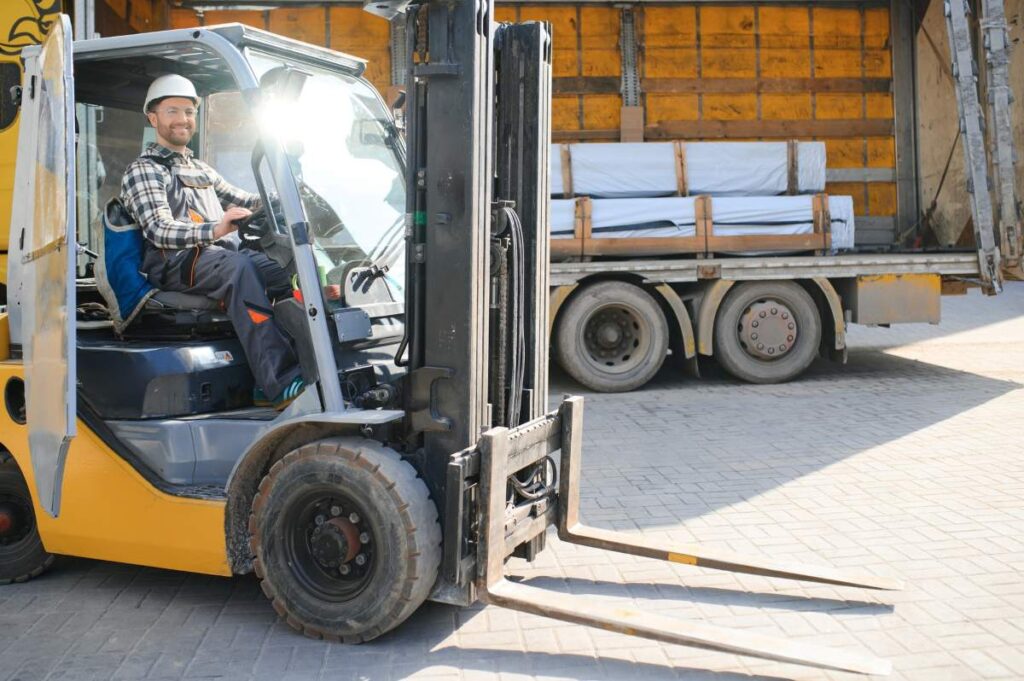
Fork positioners allow operators to adjust the width between the forks hydraulically from the cab, rather than manually repositioning them by hand.
Why They Matter
Without fork positioners, operators must leave the cab to manually adjust fork spacing – an inefficient process that wastes valuable time and increases the risk of strain or injury. In operations where load sizes vary throughout the day, this inefficiency can significantly impact productivity.
Fork positioners allow operators to adapt instantly to different pallet sizes, loads, or containers, keeping workflow moving smoothly.
Best For
- Warehouses handling varying pallet sizes
- Mixed-load operations
- Distribution centres with frequent load changes
Key Advantage
- Faster load handling and turnaround times
- Reduced manual handling and injury risk
- Improved operator efficiency and comfort
- Greater accuracy when handling non-standard loads
Fork positioners are particularly valuable in multi-user or multi-product environments where flexibility is essential.
Paper Roll Clamps
Paper roll clamps are designed specifically for handling paper reels safely and efficiently, eliminating the need for pallets altogether.
- Productivity Gains
- Faster loading and unloading of paper rolls
- Reduced product damage caused by pallet use
- Improved use of storage space by removing pallets
Paper roll clamps apply even pressure around the load, reducing the risk of crushing or tearing. This not only protects the product but also reduces waste and rework costs.
Common Industries
- Printing
- Packaging
- Paper manufacturing and distribution
For businesses handling large volumes of paper reels, these clamps can dramatically improve both productivity and product quality.
Bale Clamps
Bale clamps are used to handle compressed materials such as cardboard, textiles, foam, or plastics. Like paper roll clamps, they eliminate the need for pallets and provide secure handling of bulky or irregular loads.
Why Use Bale Clamps?
- No pallets required, reducing material costs
- Secure handling of unstable or uneven loads
- Reduced risk of product damage
- Productivity Impact
- Faster movement of bulk materials
- Improved loading efficiency in recycling and manufacturing environments
- Lower packaging and pallet replacement costs
Bale clamps are commonly used in recycling centres, manufacturing facilities, and waste management operations where speed and safety are critical.
Rotators
Rotators allow forklift loads to be rotated up to 360 degrees, enabling controlled tipping, emptying, or repositioning of materials.
Ideal Uses
- Waste handling and recycling
- Food manufacturing and processing
- Chemical and industrial applications
Productivity Benefits
- Faster and more controlled emptying of bins or containers
- Reduced manual tipping and operator intervention
- Improved hygiene by minimising handling
- Greater consistency in discharge processes
Rotators are particularly effective in operations where materials must be emptied regularly and safely, helping to reduce downtime and improve workflow.
Push-Pull Attachments
Push-pull attachments are ideal for slip-sheet operations, allowing forklifts to handle loads without traditional pallets.
Key Benefits
- Reduced pallet purchasing and storage costs
- Increased trailer and container capacity
- Faster loading and unloading cycles
- Reduced environmental impact from pallet use
By removing pallets from the supply chain, push-pull systems can significantly improve efficiency in high-volume distribution operations.
Things to Consider Before Choosing an Attachment
While forklift attachments offer significant productivity benefits, it’s essential to choose the right solution for your operation.
Key considerations include:
- Forklift capacity: Attachments add weight and affect residual capacity
- Application and load type: The attachment must suit the material being handled
- Operator training: Additional training may be required to use attachments safely
- Compliance: All attachments must comply with LOLER and PUWER regulations
- Visibility and handling: Some attachments affect visibility and truck stability
At Acclaim Handling, we always assess your operation before recommending an attachment. This ensures the solution is safe, compliant, and delivers genuine productivity improvements – not unintended risks.
Conclusion
Forklift attachments are a powerful way to boost productivity without expanding your fleet. By enabling forklifts to handle a wider range of tasks more efficiently, attachments help businesses reduce downtime, cut operating costs, and improve safety.
Businesses can simultaneously increase efficiency, lower expenses, and improve safety with the correct setup. However, choosing the right attachment, guaranteeing compliance, and offering suitable operator training are all necessary for success.
Acclaim Handling can provide advice, supplies, and training if you’re thinking about forklift attachments, guaranteeing optimal return on investment and long-term operational success.