Forklift tyres are a wear item that is easy to run past the point where it should have been changed, and the cost of doing that is not the tyre. It is the mast, the bearings, the operator and the load that gets dropped because the truck was not sitting level.
We inspect, supply and replace forklift tyres of every type, on your site, using our own engineers working from eight depots. Acclaim Handling has serviced materials handling equipment since 1982.
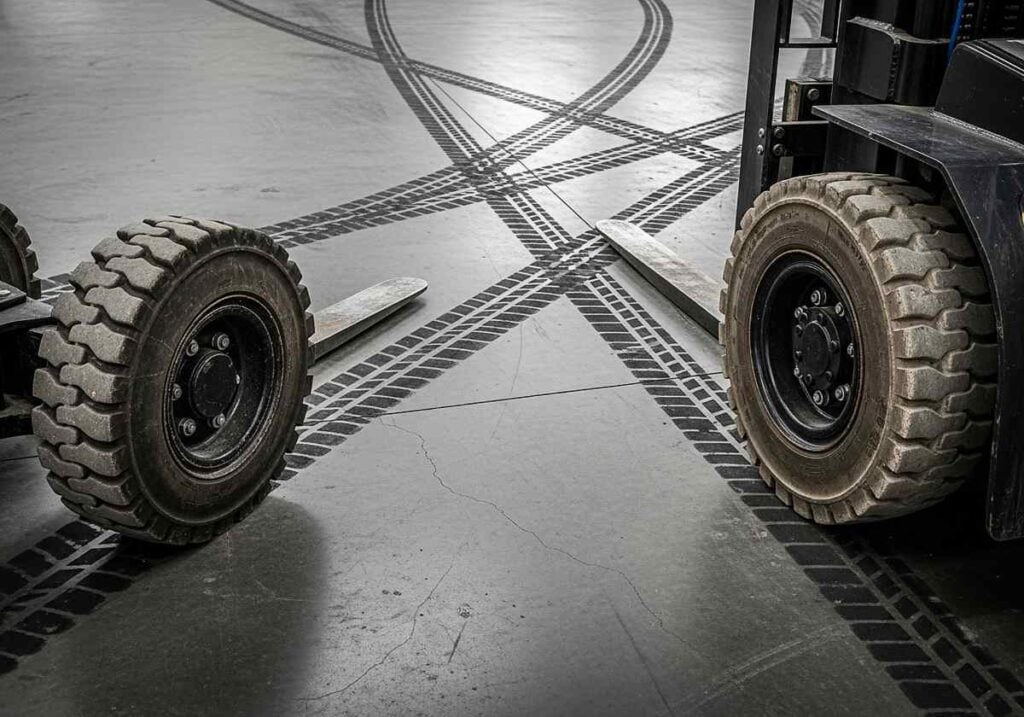
The three types, and which one you have
Cushion, or press-on solid
A solid rubber band pressed onto a steel wheel. Smooth floors, indoor work, tight turning. They cannot be repaired, only replaced, and they are pressed on and off with a press rather than changed at the roadside.
Pneumatic
Air filled, like a truck tyre. Best ride and best grip on rough or outdoor ground, and the only sensible choice on unmade surfaces. They puncture.
Solid pneumatic, or resilient
The same shape and fitment as a pneumatic but solid rubber throughout. No punctures, longer life, harsher ride. This is the usual answer for yards with debris, scrap, glass or swarf where punctures are constant.
When to replace
Most tyres carry a wear line moulded into the sidewall, often called the 50 percent or safety line. Once the tread reaches it, the tyre is at the end of its useful life whatever it looks like.
Replace sooner than that if you see chunking or pieces missing, flat spotting from braking, exposed cords or steel, the tyre spinning on the rim, or the truck sitting visibly unlevel. A worn tyre also lowers the truck, which reduces ground clearance and changes how the load sits at height.
Send us the make and model, or a photo of the tyre and the wheel. We will identify what is on it and what it takes.
What worn tyres actually cost
Stability first: capacity ratings assume tyres in good condition, and a truck on worn or unevenly worn tyres does not handle a rated load the way the plate says it will.
Then vibration. Everything the tyre stops absorbing is passed into the chassis, the mast and the operator, which turns into bearing wear, cracked welds and a genuine hand arm vibration problem.
Then traction and fuel or battery use, both of which get worse as the tyre goes.
On site replacement
Tyre changes are done on your site by our engineers, including press on work with a mobile press, so the truck does not have to be transported to a workshop and taken out of service for longer than the job needs.
If a machine is on a service contract with us, tyre condition is checked as part of the routine visit and flagged before it becomes urgent.
→ Forklift servicing · Repairs · Parts
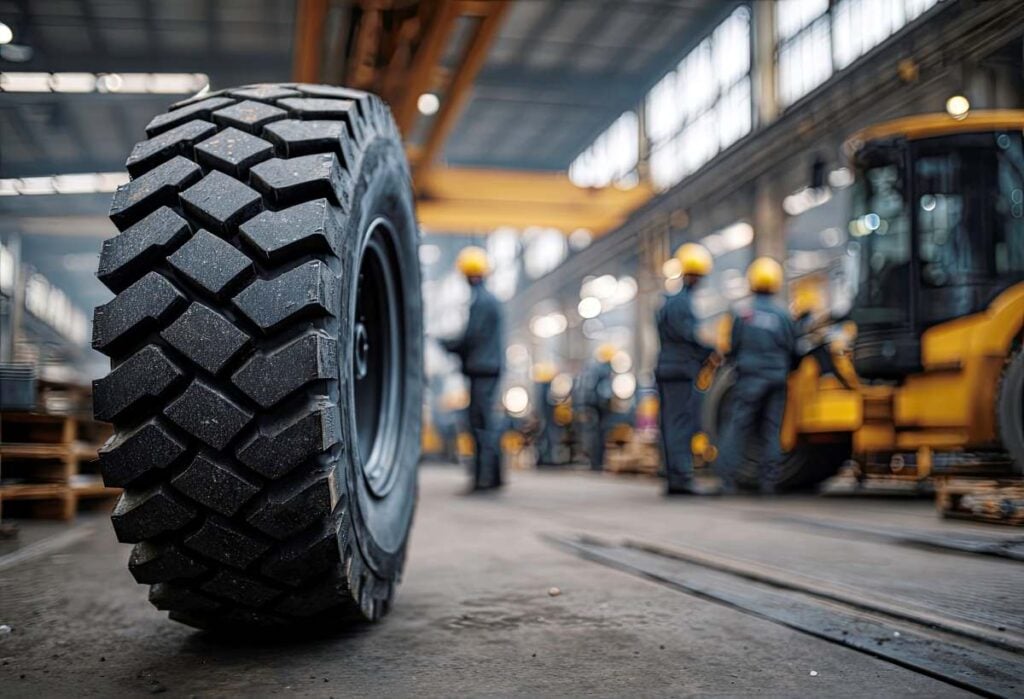
Choosing the right tyre for the site
The right tyre is decided by the floor, not by the truck. Smooth indoor concrete, an outdoor yard, a site with swarf or broken glass, a cold store, a food or pharmaceutical area needing non marking compound: each points at a different tyre, and fitting the wrong one is why some fleets replace tyres far more often than they should.
Tell us the surface and the shift pattern and we will tell you what to fit.
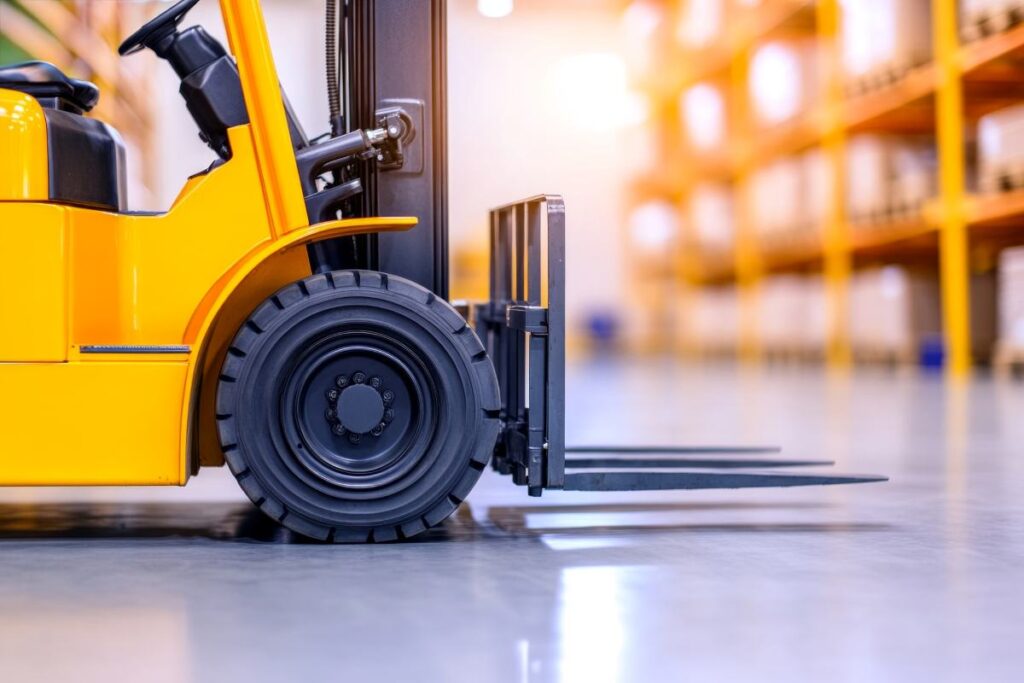
Press-on tyre fitting
Press-on tyres, also called press-on bands, are solid rubber tyres moulded onto a steel band. They are common on electric counterbalance trucks and on other trucks built for smooth indoor floors.
They cannot be levered off like a pneumatic tyre. The worn band is pressed off the wheel and the new one pressed on with a tyre press, under controlled force, so it seats square and tight. We do this on your site with our mobile press, so the truck stays where it works.
- Size and compound checked against the wheel before we start.
- Tyres on the same axle changed together, so the truck sits level.
- Standard black or non-marking bands, to suit the floor.
We supply and fit tyres and wheels for the rest of the equipment we service too, including pallet trucks, stackers, access platforms and sweepers.
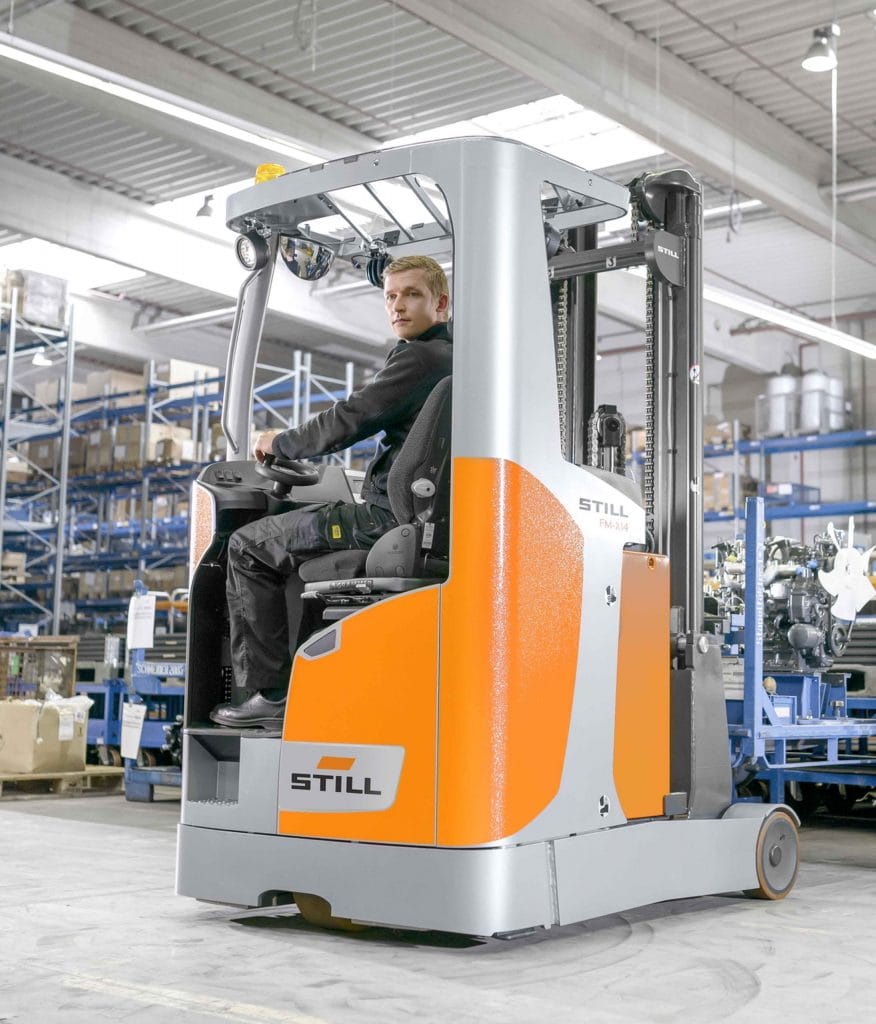
Polyurethane wheels: re-bonding onto your hubs
Reach trucks, VNA trucks, pallet trucks and stackers run on polyurethane wheels: a polyurethane tread bonded to a metal hub. When the tread wears, breaks up or comes away from the hub, the hub itself is usually still sound.
Re-bonding replaces the tread, not the wheel. The worn polyurethane is stripped off your original hub, new polyurethane is moulded onto it, and the wheel is finished to size and refitted. It covers load wheels and drive wheels.
Re-bonding is usually the better answer when:
- the hub is sound and only the tread has worn or broken up;
- the wheel is an unusual size, or a complete new wheel is hard to get for an older truck;
- several trucks of the same type need wheels at once.
A cracked or damaged hub needs a new wheel, and we will tell you which you have. Worn wheels matter most on reach and VNA trucks, because a truck that does not sit level carries the load less accurately at height.
Non-marking tyre conversions
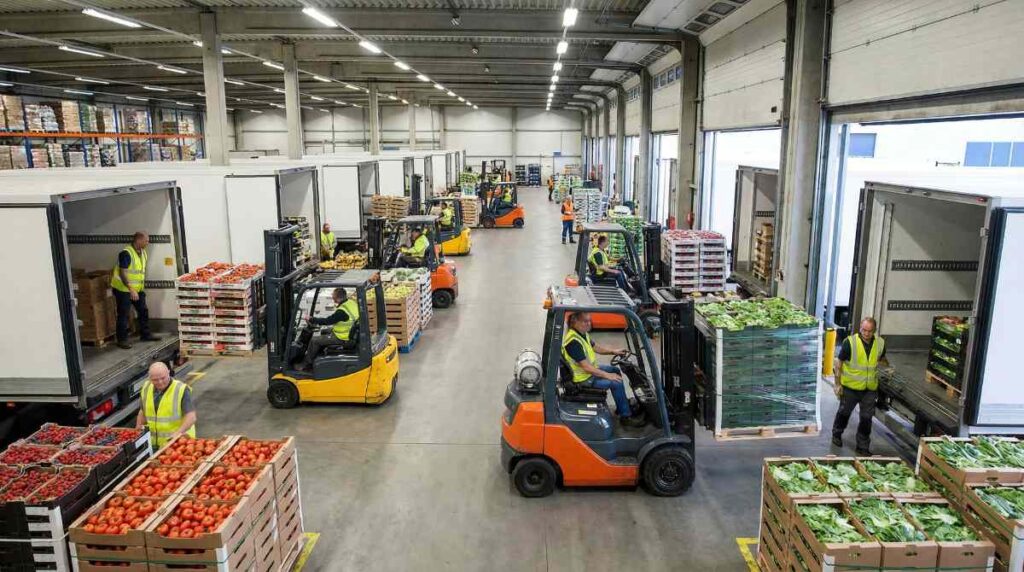
Standard black tyres leave marks. When a truck moves onto finished floors, into food production, or into an exhibition hall, the answer is a non-marking tyre conversion: the same size and fitment, in a compound that does not mark.
- Counterbalance forklifts take non-marking solid rubber tyres, usually grey or white, as press-on bands or solid pneumatics.
- Reach trucks, pallet trucks and stackers on polyurethane wheels do not leave black marks. Worn ones can be re-bonded rather than replaced.
Worth knowing first: non-marking compound leaves out the carbon black that marks floors, and on a hard-working truck it can wear faster than a standard black tyre. Tell us the floor, the site and the duty, and we will say what to fit. Our article on warehouse floors covers why the surface matters.
Talk to us
Call 01708 861 414 or contact the team. Tell us the make and model, or send a photo of the tyre and the wheel, and we will identify what is on it and what it takes.
All prices ex VAT.
Send us the make and model, or a photo of the tyre and the wheel. We will identify what is on it and what it takes.
Forklift tyres: common questions
Eight depots across the UK
Our own engineers, out of our own depots - wherever you are, service comes from us.
Talk to us about Forklift Tyres and Tyre Replacement
Monday to Friday, 8:00am to 5:00pm.
Additional Services
Checkout our range of other machine services below