On this page
- The Foundation of Warehouse Operations
- Flooring Directly Affects Forklift Performance
- Safety Starts at Ground Level
- Warehouse Floors Influence Productivity
- The Impact on Equipment Maintenance Costs
- Flooring Affects Racking Stability
- Clean Floors Support Better Operations
- Flooring Can Affect Employee Comfort
- Long-Term Cost Savings
- Supporting Flexible Warehouse Operations
- Why Flooring Should Never Be an Afterthought
- Conclusion
When businesses think about warehouse efficiency, they often focus on racking systems, forklift fleets, inventory management, and workflow processes. However, one critical element is frequently overlooked: the warehouse floor.
The floor is the foundation of every warehouse operation. It supports racking, equipment, inventory, vehicles, and employees while influencing safety, productivity, maintenance costs, and operational efficiency.
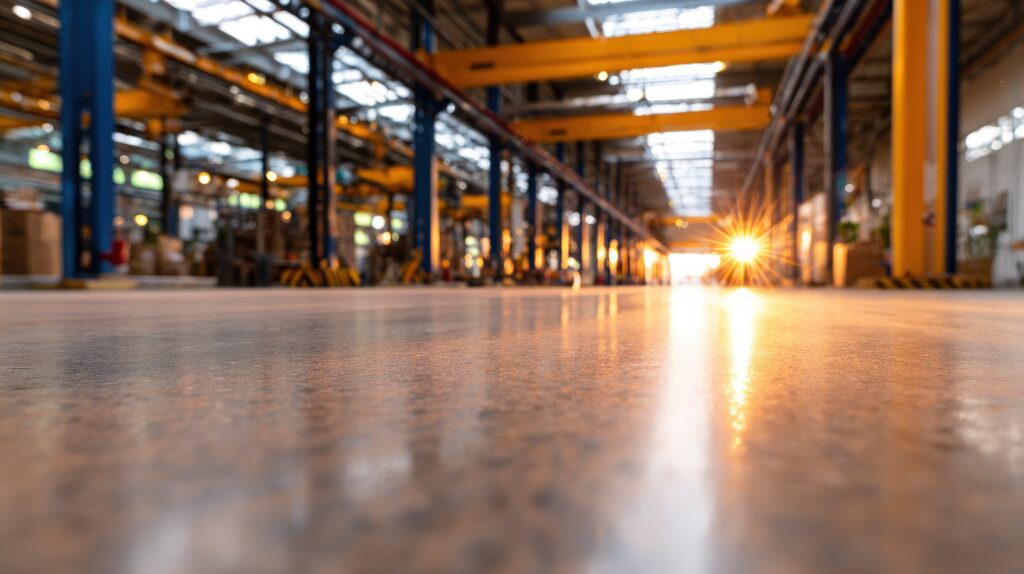
A well-designed and properly maintained floor can improve performance across an entire facility. Conversely, poor flooring conditions can contribute to accidents, equipment damage, higher operating costs, and reduced productivity.
Here’s why warehouse floors matter more than many businesses realise.
The Foundation of Warehouse Operations
Every movement within a warehouse depends on the floor beneath it.
Forklifts travel across it thousands of times each week. Employees walk on it throughout their shifts. Pallets, racking systems, and stored goods all rely on its structural integrity.
Because warehouse floors are subjected to constant use, they must withstand:
- Heavy loads
- Frequent vehicle traffic
- Impact from equipment
- Continuous foot traffic
- Changing environmental conditions
Even minor flooring issues can quickly affect day-to-day operations.
Flooring Directly Affects Forklift Performance
Forklifts perform most effectively on smooth, level surfaces.
Uneven flooring can create a variety of operational challenges, including:
- Reduced vehicle stability
- Increased vibration
- More difficult load handling
- Accelerated tyre wear
- Greater operator fatigue
When forklifts repeatedly travel across damaged surfaces, potholes, cracks, or uneven joints, additional strain is placed on both the machine and the operator.
Over time, this can increase maintenance requirements and reduce equipment lifespan.
A high-quality warehouse floor helps forklifts operate safely and efficiently while minimising unnecessary wear and tear.
Safety Starts at Ground Level
Warehouse safety is influenced by many factors, but flooring conditions often play a larger role than businesses expect.
Damaged or poorly maintained floors can create hazards such as:
- Slips and trips
- Forklift instability
- Load shifting
- Reduced traction
- Obstructed pedestrian routes
Cracks, surface deterioration, uneven sections, and debris can all increase the likelihood of incidents.
Even seemingly minor defects can become significant risks when forklifts are carrying heavy loads.
Maintaining safe flooring conditions should form part of every comprehensive warehouse risk assessment process to help identify hazards before they contribute to accidents.
Warehouse Floors Influence Productivity
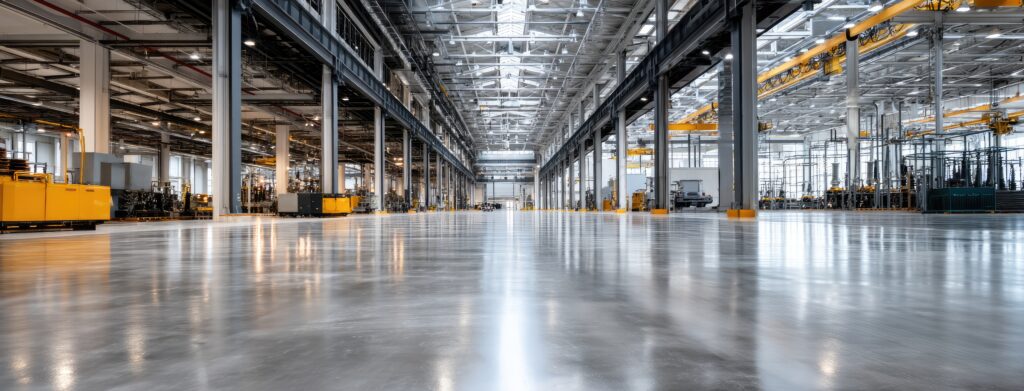
Efficiency is often measured in seconds and minutes across warehouse operations.
Small delays caused by flooring problems can accumulate quickly throughout the day.
For example, operators may need to:
- Reduce travelling speeds
- Take longer routes
- Navigate around damaged areas
- Move loads more cautiously
When multiplied across dozens or hundreds of daily journeys, these small inefficiencies can significantly affect overall productivity.
Smooth flooring allows equipment and employees to move efficiently throughout the facility.
The Impact on Equipment Maintenance Costs
Warehouse floors can have a direct influence on equipment maintenance requirements.
Rough or damaged surfaces increase stress on:
- Tyres
- Steering systems
- Suspension components
- Hydraulic systems
- Mast assemblies
Constant vibration and repeated impacts can accelerate wear on critical forklift components.
Businesses often focus on maintenance schedules without recognising that flooring conditions may be contributing to increased repair costs.
Investing in floor maintenance can help reduce long-term equipment expenses while improving reliability.
Flooring Affects Racking Stability
Warehouse floors do more than support vehicle movement.
They also provide the foundation for storage systems and racking structures.
Uneven flooring can affect:
- Rack alignment
- Load distribution
- Structural stability
- Installation accuracy
In facilities using high-bay racking systems, even small floor irregularities can become significant concerns.
Properly level floors help ensure storage systems remain stable and perform as intended throughout their lifespan.
Clean Floors Support Better Operations
Floor condition and cleanliness often go hand in hand.
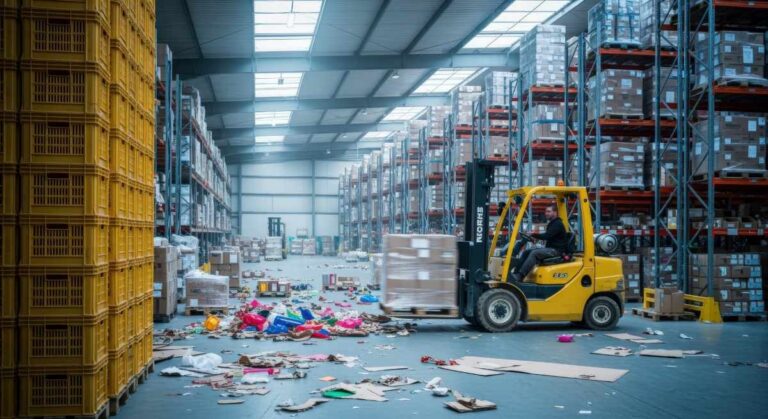
Dust, debris, spills, and loose materials can create both safety and operational issues.
Benefits of maintaining clean floors include:
- Improved visibility
- Reduced slip hazards
- Better equipment performance
- Easier housekeeping
- Enhanced workplace appearance
Clean, well-maintained flooring also creates a more professional environment for employees, visitors, and auditors.
Regular cleaning programmes should be considered part of overall warehouse management rather than simply a housekeeping task.
Flooring Can Affect Employee Comfort
Employees spend entire shifts working within the warehouse environment.
Floor conditions can influence comfort levels in several ways.
Poor flooring may contribute to:
- Increased vibration exposure for operators
- Physical strain during manual handling
- Greater fatigue
- Reduced workplace satisfaction
A smoother operating environment often improves employee comfort and can support better productivity over time.
While flooring alone will not eliminate fatigue, it plays an important role in creating an efficient and comfortable workplace.
Long-Term Cost Savings
Businesses sometimes view floor maintenance and repairs as avoidable expenses.
In reality, neglecting warehouse flooring often creates higher costs later.
Potential consequences of poor floor maintenance include:
- Increased equipment repairs
- Reduced productivity
- Higher accident risks
- Premature tyre replacement
- Damage to inventory
- More frequent facility repairs
Addressing minor flooring issues early is usually far more cost-effective than allowing problems to develop into major structural concerns.
Supporting Flexible Warehouse Operations
Modern warehouses must adapt to changing operational requirements.
As businesses grow, facilities may need to accommodate:
- New storage systems
- Additional forklift traffic
- Increased inventory volumes
- Reconfigured workflows
A durable, well-maintained floor provides the flexibility needed to support these changes.
Businesses experiencing temporary increases in demand may also benefit from industrial forklift rental services for businesses, allowing them to expand operational capacity without committing to additional long-term equipment purchases.
However, regardless of how many forklifts operate within a facility, flooring quality remains a critical factor in maintaining safe and efficient operations.
Why Flooring Should Never Be an Afterthought
Warehouse floors are often taken for granted because they remain largely unnoticed when functioning correctly.
Yet they influence almost every aspect of warehouse performance, including:
- Safety
- Productivity
- Equipment longevity
- Storage stability
- Employee comfort
- Maintenance costs
When flooring problems emerge, the effects can be felt across the entire operation.
Regular inspections, preventative maintenance, and prompt repairs help ensure the floor continues supporting operational requirements effectively.
Conclusion
Warehouse floors are far more important than many businesses realise. They form the foundation of safe, efficient, and productive warehouse operations while directly affecting forklifts, storage systems, employees, and overall facility performance.
From reducing maintenance costs and supporting equipment reliability to improving safety and productivity, flooring quality has a significant impact on long-term operational success.
By giving warehouse floors the attention they deserve, businesses can create safer environments, protect valuable equipment, and support more efficient operations for years to come.