On this page
Electric forklifts are becoming more and more popular for many reasons, including their noise levels while running, the lower emissions and their cost efficiency, but when it comes to charging, there is quite a lot of confusion! A surprisingly common question we hear is, “Should I fully charge my electric forklift, or is it going to damage the battery life?”, so if you have thought this before, don’t worry – you aren’t alone in this boat.
Let’s clear this up, along with any confusion you might have about your electric forklift battery.

Let’s Understand Electric Forklift Batteries
In most electric forklifts, they will use one of two main battery types. This will either be:
- A lead-acid battery, which is the most traditional and common type of battery, known for its reliability and lower upfront cost.
- Lithium-ion batteries, these are a newer technology, offering a faster charge, longer life cycles and less maintenance.
Each different battery type has slightly different requirements for charging. Understanding these differences an make a big impact on your forklift’s performance and lifespan.
Lead-Acid Batteries – Always Fully Charge These!
If you have a forklift that runs off of a lead-acid battery (if you are unsure, you can contact our friendly team to double check!), the golden rule is to always fully charge the battery once you begin charging.
There are a couple of reasons why you should follow this golden rule:
- Partial charging, which can also be known as “opportunity charging”) can cause sulfation, which is a chemical buildup that reduces he battery’s capacity over time.
- Regular full charging will help to equalize the cells, maintain consistent voltage, and overall, extend the trucks battery life.
To summarise, don’t plug it in for a quick top-up in between shifts. Wait until it’s at around 20-30% of charge remaining, and then charge it fully before you use it again.
Top Tip: Try to charge your lead-acid forklift battery overnight, or during longer breaks, to ensure a complete charging cycle.
Lithium-Ion Batteries – Alot More Flexible
When it comes to lithium-ion batteries, it is a completely different story.
They are a very modern kind of battery, and they don’t suffer from any form of sulfation and are designed for the opportunity charging we spoke about previously. This means you can plug them in during your breaks, lunch hours, or shift changes and it won’t cause any harm to the battery.
In fact, doing more frequent and shorter charges on your lithium-ion battery can help to maintain a balanced temperature and steady performance during the day. For more guidance on properly charging lithium-ion forklifts, explore our detailed guide to help you charge safely and efficiently.
So, with a lithium-ion battery in your forklift, you don’t need to wait for the charge to run low, you can just charge it whenever is convenient for you!
General Charging For Any Electric Fleet

No matter what kind of battery you are using, there are a few universal rules that can help to maximise the lifespan and performance:
- Firstly, you should avoid deep discharges – don’t let your battery run any lower than 20% if it can be avoided.
- Secondly, keep the battery dry and clean, dirt and moisture can cause corrosion and/ or short circuits.
- If possible, store your forklift somewhere with a moderate and steady temperature, any kind of extreme heat of cold can affect the battery chemistry.
- Then always regularly inspect your battery! Check cables, connectors, and electrolyte levels for the lead-acid batteries.
- Finally, ensure you are using the right charger which was designed for your battery type and voltage.
Getting the Most from Your Forklift Fleet
Battery care plays a massive role in keeping your forklifts reliable, cost-effective and ready for action. At Acclaim Handling, not only do we supply electric forklifts from leading brands such as Hyundai and STILL, but we also provide expert forklift servicing and maintenance to help you get the best out of your equipment!
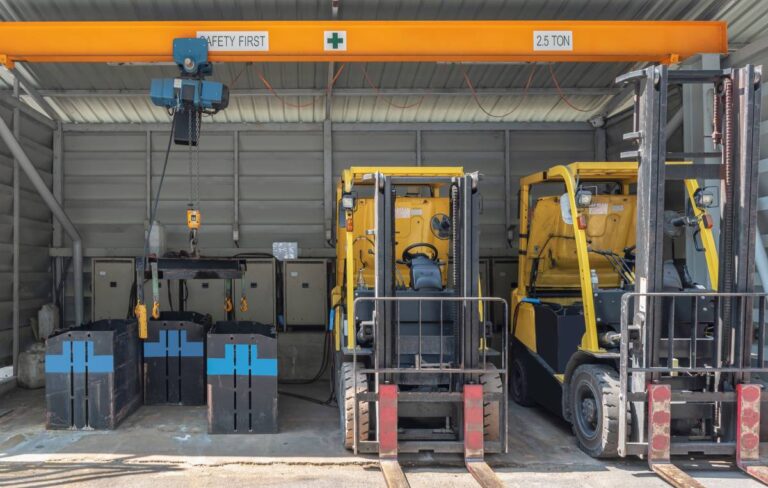
Whether you’re running a single truck or a large fleet, our team can guide you on the best charging practises for your specific models. If you are planning a charging area, we also plan and equip charging stations and charging rooms.
Proper charging isn’t just about being able to keep your forklift trucks running – it’s about making the most out of your investment and keeping your fleet moving effectively for years to come.