Forklifts are the most heavily regulated piece of equipment on most sites, and the duty to keep them safe and legal sits with you rather than with whoever supplied them. This page sets out what the law actually asks for, where the responsibility falls, and what we can take off your hands.
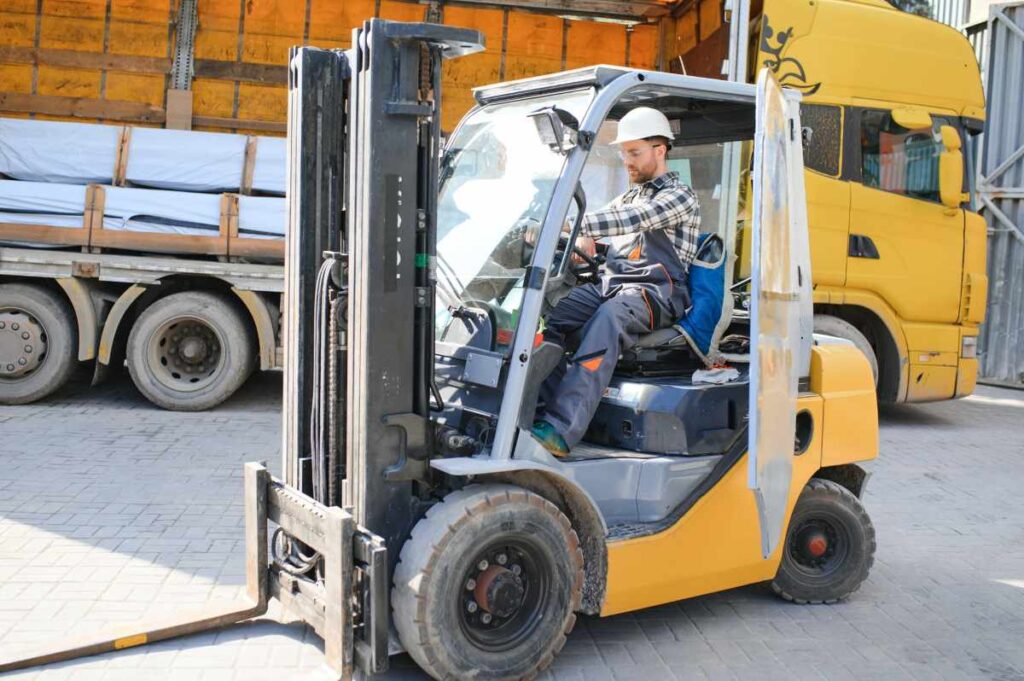
What non-compliance actually costs
Lift trucks are involved in a significant share of serious workplace transport injuries every year, and the enforcement position is unambiguous: since 2016 sentencing guidelines have linked health and safety fines to company turnover, so a single incident can produce a six figure penalty for an organisation that would previously have been fined thousands.
The practical risks, in the order they usually bite:
- An HSE improvement or prohibition notice, which can stop a machine, an area or an operation immediately.
- A weakened insurance position where a machine was in use without a current thorough examination.
- Failed customer audits. If you supply into aerospace, defence, food or retail, your own compliance is audited as part of theirs.
- The incident itself, which is the reason the rest of it exists.
The commonest finding on a real site is not a broken truck. It is a pre-use check that everyone signs and nobody does.
The HSE workplace transport pages set out the regulator’s own position if you want to read the source.
LOLER and PUWER: which covers what
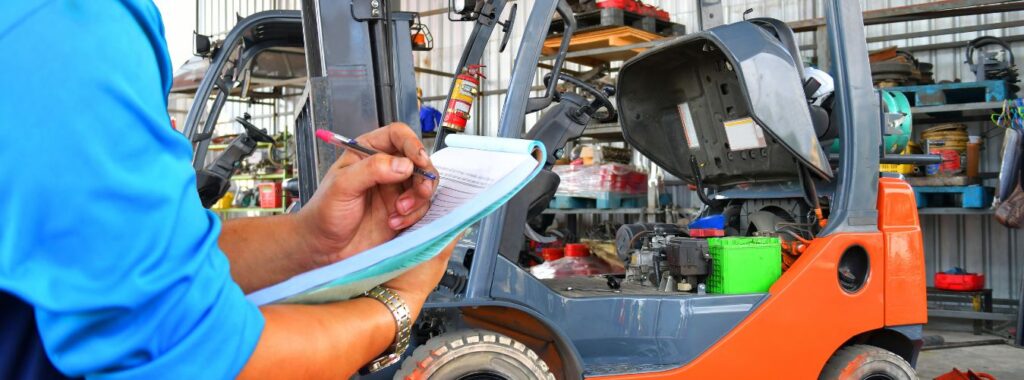
Two sets of regulations do most of the work, and they cover different parts of the same machine. People routinely assume a service covers both. It does not.
| Aspect | LOLER 1998 | PUWER 1998 |
|---|---|---|
| Covers | The lifting function: forks, carriage, chains, mast, hydraulics | The machine as work equipment: brakes, steering, tyres, lights, guarding |
| Core duty | Thorough examination by a competent person | Equipment suitable, maintained, and used only by trained people |
| Interval | At least 12 months, or 6 where it lifts people or is a lifting accessory, or per an examination scheme | No fixed interval: maintained in efficient working order and in good repair |
| Produces | A report of thorough examination | Maintenance and inspection records |
A CFTS Thorough Examination satisfies both in one visit and produces one report, which is the practical reason the scheme exists. Our LOLER and thorough examinations pages cover the intervals, the report and the record keeping in full, and the regulations themselves are on legislation.gov.uk: LOLER 1998 and PUWER 1998.
The national scheme is run by UKMHA and CFTS, who publish guidance at thoroughexamination.org and fork-truck.org.uk.
Our accreditations, with the certificates
Anyone can say they take safety seriously. These have been audited by somebody else, and every certificate is published rather than described:
- ISO 45001 occupational health and safety. We were the first independent UK forklift company to be awarded it, assessed by BSI.
- ISO 9001 quality management, achieved almost ten years earlier, again as one of the first UK independents.
- UKMHA accreditation. We were also the first company to revalidate that audit accreditation.
- CFTS accreditation for thorough examinations.
- SafeContractor, including Safe PQQ verification.
- JOSCAR, the supplier assurance system used across aerospace, defence and security.
- RTITB accreditation for operator training at Purfleet, Kent and Portsmouth.
- Cyber Essentials.
- Our HSEQ policy statement.
If you are completing a supplier questionnaire, the evidence is already here.
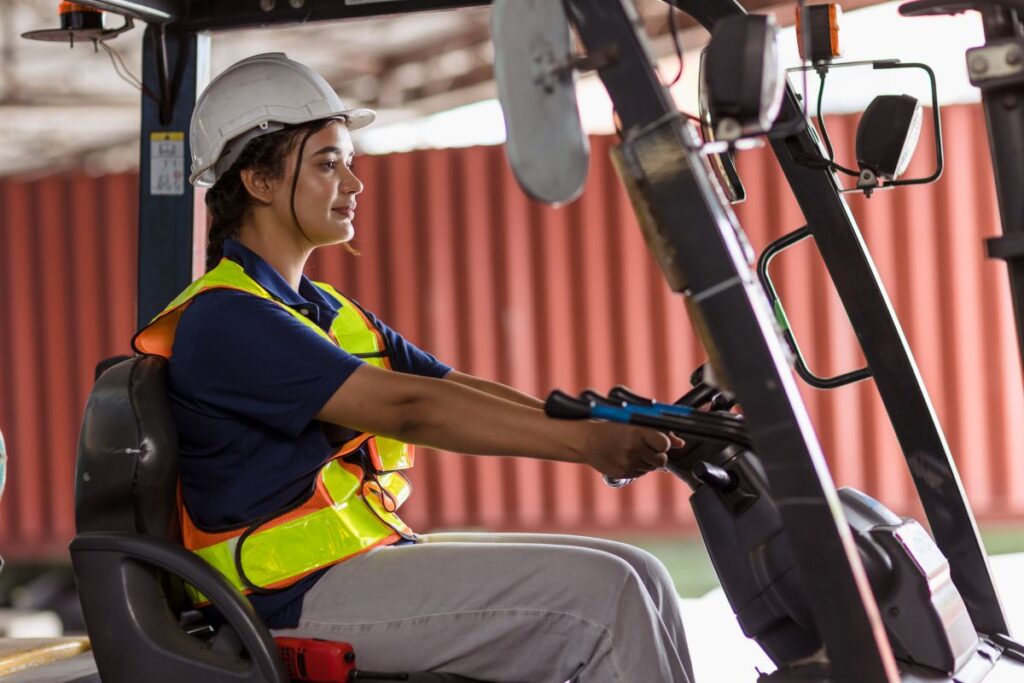
Operator training and who is allowed to drive
PUWER requires that work equipment is used only by people who have received adequate training. For lift trucks that means accredited operator training, refresher training at sensible intervals, and conversion training when an operator moves to a different type of machine. It also means the employer authorising the operator in writing for that truck and that site.
Two things that catch people out:
- A certificate covers a category of machine, not every truck. An operator certificated on a counterbalance is not certificated on a reach truck, and certificates do expire.
- Novice, semi-experienced and experienced operators need different courses. Putting everyone through the same one is wasteful, and for the novice it is inadequate.
We are RTITB accredited at three centres, and the course has to match the machine: counterbalance, reach truck, very narrow aisle, powered pallet truck, order picker and MEWP and scissor lift among others. See all forklift training courses, and the HSE’s approved code of practice on rider-operated lift trucks (L117) for the official guidance on training standards.
Not sure which machines are due what? A free site visit will tell you where you actually stand.
The pre-use check and risk assessment
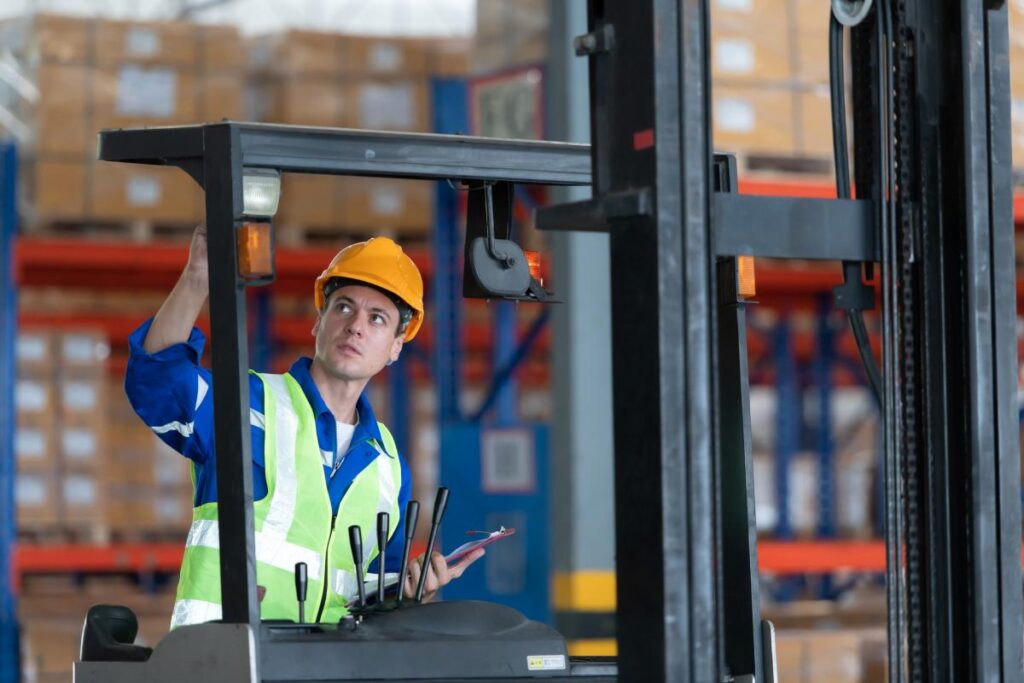
Most of the compliance burden is not the annual examination. It is the daily routine that catches problems in between. LOLER regulation 9(3)(b) expects inspection by a competent person at suitable intervals between thorough examinations, and PUWER expects equipment maintained in efficient working order.
In practice:
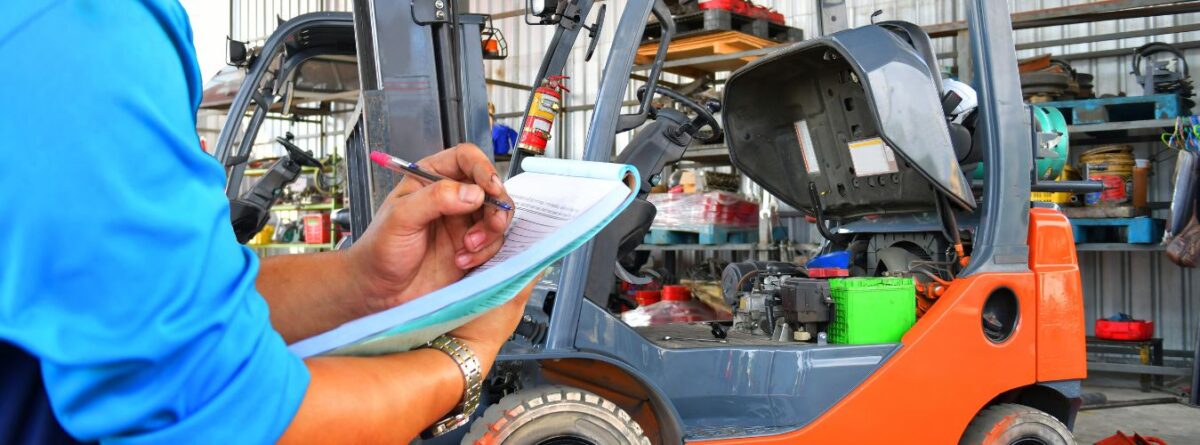
- A documented pre-use check each shift: tyres, forks, chains, mast, hydraulics for leaks, brakes, steering, horn, lights, seat belt. Recorded, not just performed.
- A defect reporting route the operator will actually use, and a clear rule about what stops the truck.
- A workplace risk assessment covering pedestrian segregation, traffic routes, loading areas, racking, floor condition, visibility and lighting. Our guide to a warehouse risk assessment walks through it.
- A plan for battery charging areas, which give off hydrogen while charging. See forklift batteries.
Where the responsibility sits
This is worth being blunt about, because it is the thing people get wrong most often.
The duty to have equipment examined, maintained and operated safely sits with you as the employer or the person in control of the equipment. Buying a service contract does not transfer it.
What a supplier can do is make it straightforward to discharge: carry out the examinations, hold the schedule, provide the reports, train the operators, and say plainly when something has to stop. What no supplier can do is take the duty off you.
One consequence people miss: under LOLER regulation 9(4), you must not use lifting equipment obtained from another business unless it is accompanied by physical evidence that the last thorough examination has been carried out. Hire a machine in, ask for the report before it works. Hire one out, send the report with it.
What we can take off your hands
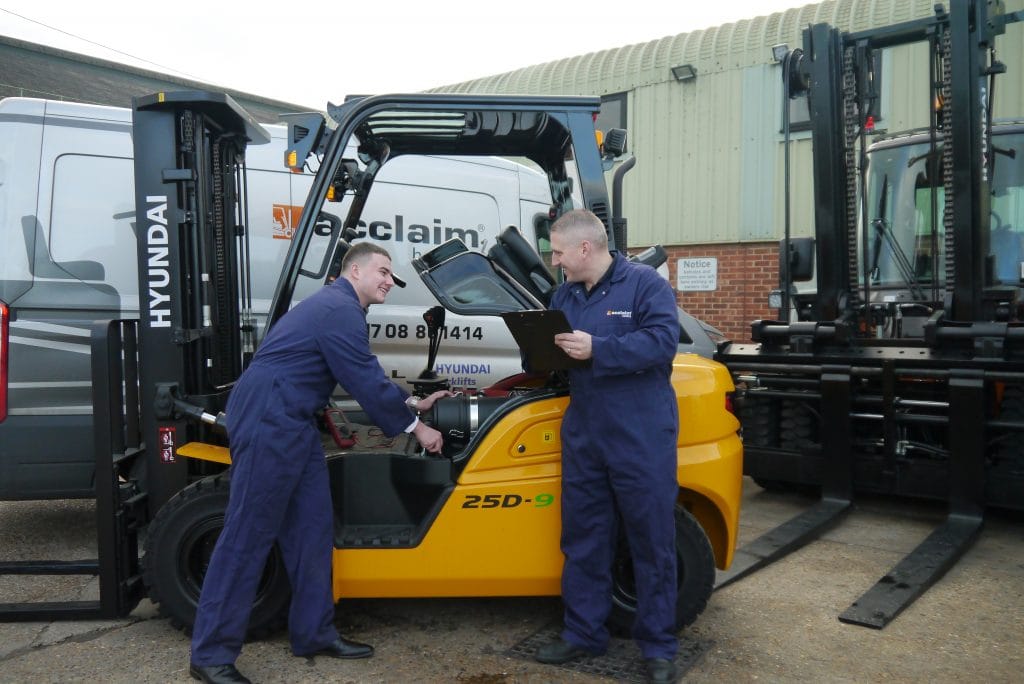
- CFTS thorough examinations, LOLER and PUWER in one visit, on any machine, whoever supplied it: thorough examinations.
- Planned servicing and repairs from eight depots with our own engineers: servicing and repairs.
- RTITB accredited operator training on every category we service, from counterbalance to manual handling and banksman: see all training courses.
- Compliance tracking across a fleet, so examination dates are scheduled before they fall due: fleet management.
- Parts from over £1 million of UK stock, so a defect found on an examination can be fixed rather than parked: forklift parts.
- Specialist compliance where an atmosphere is hazardous: explosion protection.
Where to start if you are not sure
If you would rather work through it yourself first, am I compliant is a practical self-check. What is the difference sorts out LOLER and PUWER, and thorough examination vs service covers the one people get wrong most often.
Otherwise the quickest way to find out where you stand is to have someone walk the site. A free site visit will establish which machines are due what and when, whether the pre-use checks are real, and whether your operators are certificated for the trucks they are actually driving.
That is a more useful starting point than a questionnaire, and it costs nothing.
Not sure which machines are due what? A free site visit will tell you where you actually stand.
Compliance: common questions
Eight depots across the UK
Our own engineers, out of our own depots - wherever you are, service comes from us.
Talk to us about health, safety and compliance
Monday to Friday, 8:00am to 5:00pm.
Additional Services
Checkout our range of other machine services below