On this page
- 1. Executive Summary
- 2. What is actually being compared?
- 3. Energy and operating cost
- 4. Emissions and workplace air quality
- 5. Charging, uptime and duty cycle
- 6. Maintenance and lifecycle
- 7. Safety, regulation and infrastructure
- 8. Productivity and operating environment
- 9. UK examples from our customers
- 10. The 2026 decision matrix
- 11. Where diesel still has an operational advantage
- 12. Where electric has the stronger business case
- 13. Strategic outlook and conclusion
1. Executive Summary
In 2026, the debate about forklifts is no longer just about whether electric models are greener or diesel models are more convenient. The real issue is which fuel type can get the job done at the lowest overall cost, factoring in energy, downtime, risk, infrastructure needs, and environmental impact.
The available evidence leads to a clear but conditional conclusion. Battery-electric forklifts perform best when work is mostly indoors or on suitable hard surfaces, when charging can fit into the operating schedule, and when concerns like air quality, noise, energy efficiency, or carbon reduction are important. Diesel remains a good option for machines that face sustained heavy duty, rough or outdoor conditions, quick refuelling needs, or situations where charging infrastructure would seriously limit availability.
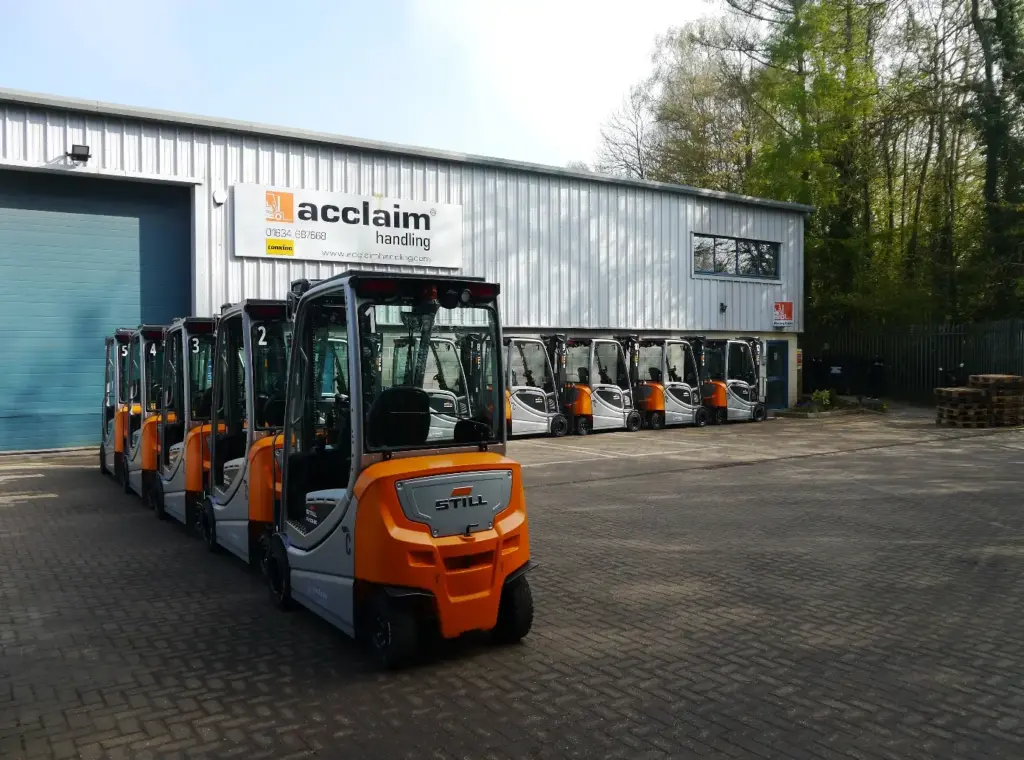
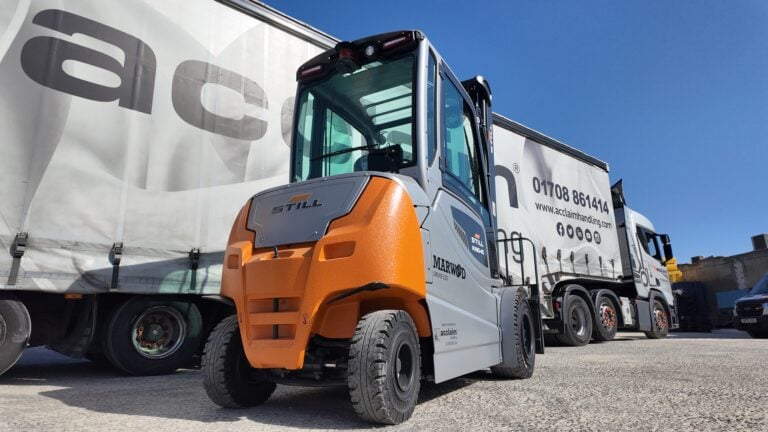
Our own customers show the practical side: Charltons Farm and Totally Branded both moved to electric forklifts to cut their reliance on diesel and make use of their solar panels (section 9).
The energy difference between the two is large. A typical medium-duty forklift uses about 765 kWh of energy per shift on diesel and 341 kWh per shift on battery electric, which is about 55% less. For a light-duty forklift, the numbers are 371 and 166 kWh per shift, again about 55% lower for battery electric. These are typical figures, not an average for UK fleets.
The environmental argument is also strong for electric equipment, especially inside buildings. HSE (Health and Safety Executive) guidance points to diesel forklift trucks as a source of diesel engine exhaust emissions and advises employers to think about alternatives like battery-powered vehicles when possible. HSE notes that diesel exhaust includes particulate matter, nitrogen oxides, carbon monoxide, hydrocarbons, and other substances, and that long-term exposure at work is linked to health risks.
The comparison is not balanced. Electric forklifts move the operational burden from managing fuel logistics to overseeing electricity and battery systems. Charging stations, electrical capacity, battery type, charging approach, and shift scheduling all become other factors to consider. Older lead-acid setups may need substantial charging and cooling periods, whereas modern lithium-ion systems allow more flexible charging options. Battery-electric forklifts also gain on charging time and energy use, but infrastructure still shapes the business case.
The 2026 decision should be made at the truck-and-task level. A mixed fleet can be the most sensible option: electric trucks for indoor, repetitive, and emissions-sensitive work; diesel for certain heavy-duty, rough-terrain, or infrastructure-limited uses. The aim is not to pick one technology for every task. It is to align each job with the powertrain that can perform it reliably and cost-effectively.
2. What is actually being compared?
A forklift is a working machine, not a road vehicle equipped with forks. The fuel type affects how energy is supplied to the traction system, how heat and emissions are handled, how the truck is refueled or recharged, how maintenance is carried out, and how the truck performs throughout a shift.
A diesel forklift transforms chemical energy in fuel via an internal-combustion engine. The engine, fuel system, cooling system, exhaust system, and transmission make up a complex mechanical assembly. This design is familiar to technicians and is especially suited for quick refueling and extended operation. It also generates combustion exhaust at the location where it is used.
A battery-electric forklift obtains electricity from an electrochemical battery and supplies it through motor controllers and electric motors. Lacking a combustion engine removes tailpipe emissions and alters the maintenance needs. Contemporary systems may also include regenerative braking, electronic controls, telematics, and battery-management systems. The battery in an electric forklift supplies both traction and lifting energy, and recovers energy under regenerative braking.
This distinction is important because the energy pathway differs. Diesel stores its energy onboard as liquid fuel and can be refilled rapidly. Electric equipment shifts the energy demand upstream to the grid, charger, and battery. That can be beneficial when electricity is easily accessible, especially if on-site solar generation is available, but it may pose a limitation when electrical capacity or charging duration is restricted.
| Factor | Diesel forklift | Battery-electric forklift |
|---|---|---|
| Energy source | Liquid diesel fuel | Grid or on-site electricity stored in battery |
| Point-of-use emissions | Combustion exhaust | No tailpipe combustion emissions |
| Refuelling / charging | Fast liquid refuelling | Charging time depends on battery and charger |
| Indoor air quality | Requires control of diesel exhaust | Avoids diesel tailpipe emissions |
| Noise profile | Engine plus driveline noise | Generally dominated by tyres, hydraulics and warning systems |
| Infrastructure | Fuel storage / delivery | Chargers, electrical capacity and charging area |
| Energy recovery | Limited by conventional ICE architecture | Regenerative braking can recover energy |
| Maintenance architecture | Engine, fuel, exhaust, cooling and driveline systems | Battery, motors, controllers, chargers and electronics |
The key point is that neither technology is simply ‘better’. Electric removes one type of operational issue and introduces another. Diesel does the same. A serious fleet decision begins with the work pattern rather than with the truck’s brand.
3. Energy and operating cost
One of the most noticeable differences between the two powertrains is energy cost, yet it is also among the simplest areas to present a misleading comparison. A litre of diesel and a kilowatt-hour of electricity are not comparable units, and the amount of useful work obtained from either depends on the whole powertrain’s efficiency and the operating cycle.
UK energy prices offer an important backdrop for 2026. The average non-domestic electricity price in the UK was 24.3 p/kWh in 2025, down from 26.3 p/kWh in 2024. Prices vary considerably with consumption and contract terms. The government’s weekly road-fuel statistics show diesel prices shifting notably during 2026; the series for the week starting 3 August 2026 recorded a UK average diesel pump price of 179.19 pence per litre.
Without measured truck consumption, these figures should not be used directly into a basic ‘pence per hour’ calculation. A forklift’s fuel or electricity usage depends on load, lift height, travel distance, acceleration, idling, floor condition, tyre type, temperature, and operator behavior. Therefore, the proper metric is energy per productive hour or, even better, energy per pallet, tonne moved, or lift cycle.
| Indicator | Figure | How to interpret it |
|---|---|---|
| Non-domestic electricity, 2025 | 24.3 p/kWh | UK average across all size bands; not a site-specific tariff |
| UK diesel, week commencing 3 Aug 2026 | 179.19 p/litre | National pump-price average; actual business diesel cost varies |
| Medium-duty forklift energy, diesel | 765 kWh/shift | Typical figure |
| Medium-duty forklift energy, battery electric | 341 kWh/shift | Typical figure |
| Light-duty forklift energy, diesel | 371 kWh/shift | Typical figure |
| Light-duty forklift energy, battery electric | 166 kWh/shift | Typical figure |
Under typical assumptions, battery-electric energy use is roughly 55% lower than diesel for both the medium-duty and light-duty forklift examples. That serves as a helpful sign of the underlying efficiency gap, but it does not mean every electric forklift will use 55% less energy in every UK setting.
Fuel taxation is another relevant factor. HM Revenue & Customs states that rebated fuels like red diesel may only be used by qualifying vehicles and machines for specific purposes. A general industrial operator should not presume a forklift can run on rebated fuel just because it operates off-road. The regulations depend on the machine and its application.
Therefore, the most compelling cost evidence is site-specific. For at least several weeks, record litres of diesel, kWh of charging electricity, operating hours, and productive output. Next, assess the cost for each hour of operation and for each unit of work performed. Make sure to factor in fuel supply, charging requirements, battery swaps, upkeep, idle periods, and infrastructure.
4. Emissions and workplace air quality
The most obvious area where electric forklifts hold an operational edge is the comparison of air quality. Battery-electric trucks do not have an internal-combustion engine, so they produce no tailpipe exhaust while operating. Whereas Diesel trucks do produce such exhaust.
HSE’s guidance on diesel engine exhaust emissions specifically covers diesel-powered forklift trucks and cautions that diesel exhaust is made up of a complex blend of gases, liquid aerosols, and particulates. Among the listed components are carbon monoxide, carbon dioxide, nitrogen oxides, hydrocarbons, particulate soot, and polycyclic aromatic hydrocarbons. It further notes that diesel exhaust is a source of occupational exposure in the workplace.
HSE is clear about warehouse settings. According to its guidance, diesel-operated forklift trucks tend to generate high levels of diesel engine exhaust emissions, and the level of exposure depends on factors such as the number of vehicles in use, engine condition, driving habits, and the warehouse environment. The guidance also suggests that employers might consider electrically driven vehicles when buying forklift trucks.
Measurements back this up. Emissions from 12 diesel forklifts were recorded with portable measurement equipment during idling, moving, and working duty cycles. The time-based ranges reported were 16.6–43.9 g/h for carbon monoxide, 5.3–15.1 g/h for hydrocarbons, 26.2–49.9 g/h for nitric oxide, and 5.5–11.1 g/h for PM2.5. Nitric oxide stood out as the main emissions concern, and real-world measurements can differ considerably from generic inventory factors.
| Issue | Diesel | Battery electric |
|---|---|---|
| Tailpipe combustion | Yes | No |
| NOx at point of use | Potentially significant; depends on engine and controls | No combustion NOx at point of use |
| Particulate exhaust | Combustion-related particulate emissions | No combustion tailpipe particulate |
| Indoor air quality controls | Ventilation / extraction and risk controls may be required | Diesel-exhaust controls are not required for the truck |
| Upstream emissions | Fuel production and combustion | Electricity generation and battery supply chain |
| Carbon outcome | Depends on fuel use and emission factor | Depends strongly on electricity source and efficiency |
The final row is significant. The term ‘zero-emission forklift’ should be interpreted with care. A battery-electric forklift emits no tailpipe combustion gases, but generating electricity and manufacturing the equipment have upstream effects. The UK government’s 2026 greenhouse-gas conversion-factor framework was created specifically to account for activity-based emissions like purchased electricity and fuel.
The operational impact however is considerable. When a fleet operates within a warehouse, production facility, or enclosed loading zone, removing combustion emissions can eliminate a direct exposure source. This can ease air-quality management and possibly lessen the ventilation required specifically for combustion equipment.
5. Charging, uptime and duty cycle
The most significant operational difference between a battery-electric forklift and a diesel one is charging. Diesel trucks can usually be refuelled during a brief stop. Electric trucks need energy stored before or during use, so the charging plan becomes part of the production schedule.
Older lead-acid systems show this limitation. Conventional lead-acid batteries can supply enough power for an eight-hour shift, or about five to six hours of continuous use. They take roughly eight hours to charge, plus cooling, so multi-shift operations may need several batteries per truck. Today’s lithium-ion equipment is different, but this is why battery management became a major issue for forklift fleets.
Modern lithium-ion systems can alter that operating model. Rather than planning around long battery swaps and cooling periods, a fleet can use scheduled or opportunity charging during breaks and shift changes. The advantage is largest when the truck’s work cycle includes predictable chances to recharge.
| Operating pattern | Electric strategy | Diesel implication |
|---|---|---|
| Single shift, predictable hours | Charge during off-shift; simple planning | Very flexible refuelling |
| Two shifts with regular breaks | Opportunity charging can reduce battery-swapping needs | Fast refuelling remains straightforward |
| Three-shift continuous operation | Requires careful charger, battery and electrical-capacity design | Strong uptime advantage where refuelling is readily available |
| Remote outdoor work | Charging access becomes a key constraint | Fuel logistics can be simpler |
| Indoor warehouse | Strong fit; no combustion exhaust | Requires exhaust-control measures |
| Solar-equipped site | Potential to use on-site generation for charging | Solar does not directly replace diesel fuel |
Typical charging times are about two hours for a medium-duty battery-electric forklift and about one hour for a light-duty one. The same table lists operational ranges of roughly four to six hours for the medium-duty battery-electric case and 3.3–13.45 hours for the light-duty case, with the range depending on battery size and application. These numbers are approximate technology benchmarks; the figures for any specific truck will vary.
The practical takeaway is to stop asking ‘How long does the battery last?’ and instead ask ‘When can this truck charge without disrupting the process?’ That shift in perspective often changes the answer. A truck that can charge during breaks may have very different availability than one that must be taken out of service for a long charge.
Charging infrastructure should be planned with future fleet expansion in mind. Electrical capacity, charger placement, cable organization, airflow, fire suppression, traffic separation, and maintenance access all influence the actual cost. A forklift fleet may be electrically efficient but operationally weak if charging is not set up effectively and impact how long the trucks are operational for.
6. Maintenance and lifecycle
The maintenance comparison is not simply ‘electric needs no maintenance’. Electric forklifts still require inspection, tyres, brakes, steering, mast and carriage checks, hydraulic maintenance where hydraulic systems are used, battery-system checks, chargers, electronics and safety-critical inspections.
Diesel trucks add the maintenance burden associated with the combustion engine and its supporting systems. HSE requires work equipment to be maintained in an efficient state, in efficient working order and in good repair, and lift trucks are subject to thorough examination requirements. The fuel type therefore changes the maintenance content, but it does not remove the need for competent maintenance or statutory examination.
Electric trucks generally have fewer combustion-related systems. There is no engine oil circuit, exhaust after-treatment system or diesel fuel injection system to service. That can simplify some routine maintenance tasks. However, the technical emphasis moves towards electrical diagnostics, motor controllers, battery-management systems, chargers and high-energy battery safety.
This shift has implications for engineering capability. A workshop that has historically specialised in diesel engines may need additional electrical competence, diagnostic tooling and manufacturer-specific training. Conversely, a fleet that becomes heavily electric can reduce its dependence on engine and exhaust-system expertise while increasing its dependence on battery and electronic-system knowledge.
| Maintenance area | Diesel emphasis | Electric emphasis |
|---|---|---|
| Prime mover | Engine, cooling, fuel and lubrication systems | Traction motor and motor control |
| Energy storage | Fuel tank, lines and filtration | Battery pack and battery-management system |
| Exhaust | Exhaust system and emissions controls | None for battery-electric propulsion |
| Hydraulics | Required where fitted | Required where fitted |
| Brakes / tyres / mast | Safety-critical inspection and maintenance | Safety-critical inspection and maintenance |
| Diagnostics | Mechanical + electronic engine diagnostics | Electrical + electronic + battery diagnostics |
| Charging / refuelling equipment | Fuel storage and dispensing | Chargers, cabling and electrical protection |
| Technician skill profile | Mechanical, engine, hydraulic and electronic | Electrical, electronic, battery, hydraulic and diagnostic |
The lifecycle decision should also consider battery replacement and end-of-life planning. A battery is an energy-storage asset with its own service life, warranty conditions and replacement cost. The correct approach is to obtain manufacturer-specific battery-life assumptions for the actual duty cycle rather than applying a generic number to every lithium-ion truck.
Wider energy evidence is favorable to electric in many applications. The environmental performance of a forklift depends on the energy used to charge or fuel it, and battery-electric forklifts use less energy than diesel ones. The conclusion is therefore not that electric has no lifecycle impact; it is that the operational energy chain is different and can be materially more efficient.
7. Safety, regulation and infrastructure
Choosing a particular fuel type does not eliminate the basic safety rules that apply to forklifts. According to HSE (Health and Safety Executive), lift trucks can be dangerous in the workplace, and statistics show they are typically involved in roughly a quarter of all workplace transport incidents. HSE links many of these incidents are from oversight and insufficient training.
Therefore, the truck must be appropriate for its task, properly maintained, operated by trained and authorized personnel, and incorporated into a site transport plan. HSE’s guidance addresses pedestrian separation, traffic routes, visibility, reversing, and operator skill. These are mandatory whether the truck runs on electricity or diesel.
The fuel type adds extra control measures. Diesel creates a concern with exhaust exposure, especially in enclosed spaces. HSE’s guidance on diesel exhaust advises looking at alternatives like battery-powered vehicles where feasible and states that diesel emissions should be managed through a hierarchy that involves altering work methods, changing the workplace, or replacing diesel with a safer option.
Battery systems bring different kinds of hazards. HSE guidance on electric lift trucks notes that charging lead-acid batteries may produce explosive hydrogen gas and recommends a dedicated, well-ventilated charging area where ignition sources are kept under control. Separate HSE guidance on battery safety also covers hydrogen buildup and ventilation needs during charging.
The point is not that electric is unsafe. Rather, electric shifts the risk into a different area of engineering. A properly designed lithium-ion charging setup is a controlled electrical system; a poorly designed charging area can become a source of fire, electrical, or thermal danger. Thus, site-specific risk assessment is crucial.
| Control | Why it matters | Powertrain focus |
|---|---|---|
| LOLER thorough examination | Lifting equipment must be examined by a competent person | Both |
| PUWER maintenance | Work equipment must be maintained in efficient working order and good repair | Both |
| Diesel exhaust assessment | Controls occupational exposure to combustion emissions | Diesel |
| Charging-area design | Controls electrical, hydrogen and fire risks | Electric |
| Pedestrian segregation | Controls collision risk | Both |
| Operator training | Controls unsafe operation | Both |
| Electrical capacity assessment | Prevents infrastructure constraints | Electric |
| Fuel storage controls | Controls fire, spill and supply risks | Diesel |
UK regulations also have an impact on the diesel fuel itself. According to government guidance, non-road mobile machinery includes industrial trucks and forklifts equipped with a combustion engine, and any new non-road mobile machinery sold in the UK must have a type-approved engine and the proper markings.
Therefore, a fleet policy for 2026 should view compliance as part of the business case. The most affordable truck on paper may be the incorrect option if the site cannot safely handle its fuel, exhaust, charging, or maintenance needs.
8. Productivity and operating environment
Productivity is the very reason forklifts are used, so a fuel type comparison that focuses only on energy and emissions is not sufficient. The true metric is the amount of useful work accomplished per available hour. This includes travel, lifting, waiting, charging or refueling, maintenance, and operator time.
Diesel’s main productivity benefit is how quickly it can be refueled. For a truck that operates for long stretches without a practical chance to charge, the ability to pause briefly, refuel, and get back to work is highly beneficial. This is especially important for heavy-duty outdoor tasks, yards, and operations located far from fixed electrical infrastructure.
Electric power can offer a productivity benefit in a different manner. It can remove trips to fuel stations, avoid engine warm-up, reduce indoor restrictions related to exhaust, and enable opportunity charging. Current battery-electric forklifts can give a practical operating range with charging times of roughly one to two hours.
Noise is another operational consideration. A quieter powertrain may enhance working conditions in certain settings, but operators and site managers should not expect electric equipment to be completely silent. Pedestrian warning systems and hydraulic functions can still be significant sources of noise.
The surface and environment are vital factors. Electric trucks can be designed for outdoor use, but the business case is most favorable when the operating surface, weather exposure, gradient, duty cycle, and load match the truck’s design. Diesel frequently maintains an edge in harsh or highly unpredictable working conditions.
| Operating characteristic | Electric tends to win when… | Diesel tends to win when… |
|---|---|---|
| Indoor work | Exhaust-free operation is valuable | Exhaust controls are manageable and flexibility is essential |
| Shift pattern | Charging windows are predictable | Continuous duty leaves little charging opportunity |
| Fuel / energy access | Electrical supply is available | Fuel delivery is easier than electrical infrastructure |
| Work surface | Firm, maintained surfaces | Rough terrain or demanding outdoor conditions |
| Noise-sensitive sites | Lower engine noise is beneficial | Site controls already manage engine noise |
| Sustainability target | Electricity is low-carbon or on-site generation exists | Diesel remains operationally necessary |
| Fleet standardisation | Most trucks share compatible charging architecture | Mixed or remote fleet needs fast refuelling |
A robust procurement process therefore begins with the operating map. Map out where each truck operates, its daily running hours, the number of lifts it performs, its stopping times, parking locations, and how energy can be supplied. Once the actual duty cycle is visible, the right powertrain often becomes clear.
For managers, this is also the stage where telematics becomes valuable. Actual operating hours, idle time, battery state of charge, charging events, impacts, and utilisation can show whether a truck is truly energy-limited or just inefficiently scheduled. A 2026 fleet should use measured operating data whenever possible.
9. UK examples from our customers
Two of our own customers show how the move works in practice.
Charltons Farm, a family-owned fruit grower in Kent and Norfolk, wanted to reduce its reliance on diesel-powered equipment as part of its sustainability objectives, which already include 10,000 square metres of solar panels. After site and warehouse assessments and a fleet review, we recommended the STILL RX20-20, whose electric powertrain met its day-to-day lifting needs and its aim of moving away from diesel.
Totally Branded, a family-run promotional merchandise company in Swaffham, Norfolk, wanted to make use of its solar panels, which made an electric forklift a priority. After a site survey and fleet review, we supplied a Lonking CPD25X on contract hire, with planned maintenance, LOLER inspections, breakdown support and operator training.
Both followed the same order: look at how the trucks are used, look at the energy available on site, then choose the machine. That is the right way to approach the change for any fleet.
10. The 2026 decision matrix
A technology choice should be evaluated based on the task at hand, rather than a bias toward electric or diesel options. This matrix, crafted for a UK fleet assessment, is deliberately cautious: if an application faces a critical limitation, that issue should be addressed prior to making a purchase.
| Decision factor | Weight | Electric score guide | Diesel score guide |
|---|---|---|---|
| Indoor / enclosed operation | High | Strong advantage where exhaust avoidance matters | Requires effective exhaust controls |
| Continuous multi-shift duty | High | Needs charging and battery strategy | Strong refuelling flexibility |
| Charging availability | High | Essential enabling condition | Not required |
| Fuel availability | Medium | Not relevant | Strong where fuel supply is reliable |
| Energy cost volatility | Medium | Electric tariff dependent | Diesel price dependent |
| Local air quality | High | Strong advantage at point of use | Combustion emissions require control |
| Rough outdoor terrain | High | Application-dependent | Often strong |
| Solar generation | Medium | Potential additional advantage | No direct benefit |
| Technical skills | Medium | Electrical / battery capability needed | Engine / mechanical capability needed |
| Capital infrastructure | Medium | Chargers and electrical works | Fuel storage / supply |
| Sustainability target | High | Strong fit for electrification strategy | May be retained selectively |
A practical fleet rule
When a truck mostly operates indoors, follows set shifts, comes back to a familiar depot, and has suitable charging available, battery electric should usually be the first choice considered. For trucks that run long continuous shifts, work in remote outdoor settings, handle rough ground, or perform tasks where quick refueling is essential to operations, diesel should stay on the candidate list.
After that, the choice should be checked against real-world data. Log operating hours, fuel or electricity usage, productive cycles, idle periods, downtime, maintenance work, and charging sessions. Assess cost per productive hour instead of only looking at the purchase price. To have this worked out for your own trucks, ask us for a fleet review.
A handy internal scoring system might be: operational fit + energy expense + infrastructure cost + maintenance effect + compliance or air-quality impact + resale value. The weights should match the specific business needs. A warehouse with strict indoor air-quality rules might assign emissions a very high weight; a remote construction yard might prioritize charging access and terrain more heavily.
Using this method also makes it easier to justify having a mixed fleet. No company is forced to adopt a single technology across all locations. Standardizing where it makes sense can lower complexity, while keeping a smaller diesel sub-fleet for genuinely challenging jobs can stop an unsuitable truck from being pushed into work it cannot do reliably, when diesel still holds an operational edge
11. Where diesel still has an operational advantage
In 2026, diesel is still a sensible pick for some forklift uses, especially when the main operational issue is energy availability rather than emissions.
The first benefit is quick refueling. A diesel truck can usually get back to work after a brief refueling stop, while battery-electric operation needs either enough stored energy for the shift or access to charging. If a machine runs almost nonstop and there is no practical chance to charge on site, diesel can offer a simpler availability model.
The second benefit is independence from infrastructure. An outdoor yard, construction site, farm, or remote location may have limited electrical capacity. Putting in a new supply, transformer, distribution board, chargers and appropriate cable routes can substantially alter the financial outlook of electrification. Diesel carries its energy on board and can be refilled via fuel logistics.
The third factor is challenging terrain and duty cycles. Some heavy-duty uses demand high continuous power, large capacities, pneumatic tyres or rough-terrain setups. Electric models are increasingly available for demanding tasks, but the choice should rely on confirmed performance against the real load and environment, not on the assumption that an electric truck built for warehouse work will perform just as well outdoors.
Diesel is also still present in existing fleets. If a company already has fuel storage, skilled technicians, spare parts and a well-established maintenance system, the added infrastructure cost of swapping one truck may exceed what the simple purchase-price comparison suggests.
Still, diesel’s benefits come with costs that should be handled deliberately. HSE identifies diesel forklift exhaust as a workplace exposure concern and suggests looking at alternative technologies where feasible. Government regulations also mean that typical industrial users should not expect access to rebated red diesel.
| Diesel advantage | Question the fleet manager should ask |
|---|---|
| Rapid refuelling | Is the lost charging time genuinely greater than the cost of continued diesel use? |
| Remote operation | Can electrical infrastructure be installed economically? |
| Rough terrain | Does the electric alternative have a verified specification for the actual surface and load? |
| Long continuous duty | Is there a realistic charging window without reducing productivity? |
| Existing fuel infrastructure | What is the remaining life and cost of that infrastructure? |
| Existing technical skills | What new electrical / battery skills would electrification require? |
The conclusion is not ‘keep diesel’. It is ‘retain diesel where its operational advantage is real and measurable’. A diesel truck should be able to justify its place through duty-cycle requirements, not habit.
12. Where electric has the stronger business case
Electric forklifts have the strongest case where the business operations are typically indoor work, predictable routes, regular charging opportunities, solar generation, emissions-sensitive environments and high utilisation of fixed-site equipment all favour electrification.
The air-quality argument is particularly strong. HSE identifies diesel forklift trucks as a source of diesel engine exhaust exposure and specifically recommends considering electrically driven vehicles when purchasing forklifts. For a warehouse or production environment, removing combustion exhaust can simplify the control strategy and improve the working environment.
The energy case is also increasingly compelling. Battery-electric forklifts use substantially less energy than diesel, in both medium-duty and light-duty work. Our own customers, Charltons Farm and Totally Branded, show UK businesses making the move to cut diesel use and make use of on-site solar power.
The 2026 procurement model should therefore be staged.
- Map every forklift by hours, load, location, shift pattern, surface and annual fuel use.
- Identify trucks that operate predominantly indoors or return to a fixed base.
- Measure available electrical capacity and existing solar generation before selecting chargers.
- Model charging windows against actual breaks, shift changes and utilisation.
- Obtain manufacturer data for battery capacity, charging time, warranty and expected life for the actual duty cycle.
- Retain diesel where a documented operational requirement cannot yet be met by electric equipment.
- After deployment, measure kWh, diesel displaced, downtime, maintenance events and productive output.
13. Strategic outlook and conclusion
Choosing between electric and diesel forklifts is not just about which one is newer or pollutes less. For businesses that use material-handling equipment, this choice affects energy use, running costs, indoor air quality, maintenance, charging setups, availability, safety, and how well the equipment fits the operation’s needs.
The findings in this case study suggest that by 2026, electric forklifts have become much stronger in the market, especially in indoor warehouses, factories, and distribution centres where charging can be planned around the work schedule. At the same time, the evidence does not show that diesel forklifts should be removed from all situations.
A better conclusion is that choosing a forklift should depend on the duty cycle, work environment, and overall operational needs, not on a single rule for everything.
This relationship can be shown as a sequence:
Energy use is one of the clearest differences between the two types.
Energy use per shift differs sharply between powertrains. A medium-duty forklift uses about 765 kWh per shift on diesel, against 341 kWh on battery electric. For a light-duty forklift, the numbers were about 371 kWh and 166 kWh, respectively.
Based on those example numbers, battery-electric operation uses about 55% less energy per shift than diesel in both groups. These numbers should not be seen as a typical average for all UK fleets. These are typical figures for set operating assumptions. Still, they show a key point: the useful work a forklift must do does not lead to the same energy need across different powertrains.
Diesel
So, energy efficiency matters more as operating hours increase. The UK energy pricing context also shows the need to look at real fleet usage instead of just comparing basic fuel costs. The average non-domestic electricity price was 24.3 p/kWh in 2025, and diesel was about 179.19 pence per litre in early August 2026.
These figures cannot be directly turned into a forklift operating cost without knowing the machine’s actual consumption, charging losses, utilisation, and duty cycle. They do, however, show why energy costs should be part of the total cost of ownership rather than being an afterthought.
The strongest proof comes from businesses that have already made the change, like our customers Charltons Farm and Totally Branded (section 9). The case for going electric can become very strong when three things line up: regular forklift use, good charging setups, and access to cleaner electricity like on-site solar.
Air quality in the workplace is another big difference. The Health and Safety Executive say diesel engine exhaust has a complex mix of substances, including particulate matter, carbon monoxide, nitrogen oxides, hydrocarbons, and polycyclic aromatic hydrocarbons. HSE specifically names fork-lift trucks as a source of workplace exposure and says long-term work exposure to diesel exhaust may increase the risk of lung cancer.
In warehouses, HSE says diesel forklifts often create high levels of diesel engine exhaust, and it lists the number of trucks, engine condition, driving patterns, and warehouse features as things that affect exposure. HSE’s advice also suggests using safer alternative technology, like battery-powered vehicles, as a possible control measure. This makes the electric-versus-diesel choice more than just about the environment.
When forklifts run for long periods inside buildings, having no tailpipe exhaust can be a big plus for battery-electric machines in terms of operations and worker health. Measurements of real diesel forklifts back this up. Across 12 diesel forklifts in real working conditions, the recorded figures were time-based emission factors, including carbon monoxide of about 16.6–43.9 g/h, hydrocarbons of 5.3–15.1 g/h, nitrogen oxide of 26.2–49.9 g/h, and PM2.5 of 5.5–11.1 g/h.
Nitrogen oxide stood out as a particular concern. These numbers should not be seen as a direct prediction of emissions from every diesel forklift. Emissions depend on engine technology, age, load, maintenance, and working conditions. They do show, though, that diesel forklifts create a measurable amount of tailpipe emissions that battery-electric forklifts do not produce where they are used.
This difference matters a lot in enclosed warehouses, production areas, and other indoor spaces where people work. Electric forklifts, though, move the engineering problem somewhere else instead of solving it. Instead of fuel systems, exhaust after-treatment, and diesel-engine upkeep, electric fleets create needs related to battery condition, charging, electrical systems, battery-management systems, and charging infrastructure.
HSE guidance says that charging vehicle batteries can make explosive hydrogen gas. So charging areas need proper ventilation and protection against ignition sources, smoking, and open flames. The key point is not that electric forklifts are automatically free of maintenance or risk. Instead, the risks and engineering demands change with the powertrain. This matters when thinking about the workforce needed to maintain future forklift fleets.
As forklifts become more electrified, engineers and technicians will need skills beyond traditional mechanical systems. Future maintenance needs will likely include electrical fault-finding, electronic control systems, battery technology, battery-management systems, diagnostics, telematics, and connected equipment, plus the mechanical expertise still needed for safe machine operation.
The UK Government’s regulations for non-road mobile machinery also show that emissions regulation is increasingly part of the technical environment where industrial vehicles operate. Industrial trucks and forklifts with combustion engines fall under the relevant NRMM framework, and new machinery brought to the UK market must meet applicable type-approval requirements.
This means the diesel forklift of 2026 is a different regulatory situation from an older diesel machine. Diesel technology has kept improving, but regulation is steadily raising the performance standards for combustion-powered equipment. At the same time, electric equipment is improving quickly.
Battery technology, charging systems, telematics, and electronic controls are changing how fleets can be managed. The result is that forklift procurement increasingly becomes an infrastructure and data decision as well as an equipment decision.
A business thinking about electrification therefore needs to consider questions like:
Hours, loads and shifts
Charging windows and battery strategy
Electrical capacity and solar
Battery failure, charger failure and nonstop operation
Skills, maintenance and vehicle availability
These questions are important because using less energy alone does not ensure efficient operations. A forklift that uses less energy but cannot meet the needed duty cycle without too much downtime could be a bad choice for operations.
On the other hand, a diesel forklift that uses more energy but provides the needed operating ability in a tough setting may still make business sense. So, the duty cycle should be central to the decision-making process. Light- and medium-duty work differ, and charging time, battery size and battery replacement matter most in heavy operations.
Battery technology has improved a lot since the older lead-acid systems studied before. The main operational question remains the same: the energy stored in the truck must be enough to finish the required tasks, and the fleet must have a practical way to refill that energy without causing too much downtime.
For some operations, this will be easy. For others, especially high-use multi-shift settings, it will need careful fleet planning. The best strategy is unlikely to be picking one technology right away for every case. Using different kinds of vehicles together may be the most practical answer.
Electric forklifts can be chosen first where they work best: inside buildings, regular work cycles, planned charging times, places where fumes are unwanted, and locations with enough electrical power for the fleet. Diesel forklifts may still be helpful when long work hours, quick refuelling, outdoor use, heavy workloads, or weak electrical systems make going electric harder.
This does not mean diesel is always the right pick for tough jobs. Instead, the business case must honestly look at real operating limits. So, the right comparison is not: Electric is good / Diesel is bad.
Rather, it is:
Which engine type can do the needed work with the required reliability, while keeping the best mix of cost, risk, emissions, and power needs?
That question also changes how companies think about replacing their fleet. Instead of replacing trucks just because they are old, fleet managers should gather data on hours worked, energy use, fuel use, charging patterns, maintenance costs, downtime, work sites, and usage levels. The collected data can then help decide which trucks can go electric.
A practical fleet plan might then sort equipment into three groups:
| Fleet category | Decision | What to check |
|---|---|---|
| Ready for electric | Electrify now | Indoor use, Predictable duty cycle, Charging available, High annual use |
| Conditional electric | Investigate further | Charging capacity, Shifts, Battery size Infrastructure, Operating limits |
| Diesel required | Retain diesel where justified | Prove electric cannot meet the duty cycle, site conditions or total-cost requirements |
This method avoids both extremes. It stops businesses from ignoring the benefits of going electric and stops them from buying electric trucks without knowing the infrastructure and operating effects.
The environmental claim also needs a careful review. The UK government’s greenhouse-gas conversion factors give organisations the official factors and methods needed to calculate emissions from fuels, electricity, and other activities.
This lets fleet operators move beyond broad claims about whether electric or diesel is “greener” and instead find the emissions tied to their own electricity supply, charging profile, fuel use, and operating hours. This difference matters because an electric forklift’s environmental performance depends partly on the electricity used to charge it.
As electricity production becomes less carbon intensive, the possible emissions benefit of battery-electric equipment can grow further. On-site renewable generation can offer another chance, as Charltons Farm and Totally Branded show. But the environmental review should not overlook the whole equipment lifecycle.
Businesses should think about vehicle manufacture, battery manufacture, battery replacement, electricity use, diesel use, maintenance, and final end-of-life treatment when making long-term buying decisions. The evidence for this case study is strongest on operational energy, tailpipe emissions, workplace exposure, and real-world business savings.
It does not give a consistent enough primary-source dataset to claim a single universal lifecycle-emissions benefit for every forklift model and operating pattern. That limit should be noted. Good strategic analysis is not weakened by admitting where the evidence ends. The same idea applies to cost; a headline purchase price does not give a reliable answer.
Businesses should work out the total cost of ownership:
↓
Energy & Fuel
↓
Infrastructure
↓
Maintenance & Workforce
↓
Downtime & Resilience
↓
Financing
A fleet that costs more at first can still be a better business choice if its energy and upkeep costs are much lower. Likewise, a cheaper replacement may turn out to be costly if the site later needs major electrical upgrades or more trucks to handle charging limits. The choice should be based on the full cost over the whole life, not just the buying price.
The findings also show that the forklift engineer’s job is changing. Electric fleets still need skilled technical support. Safety rules about safe transport in the workplace, upkeep, and full checks still apply.
The shift to electric and electronically controlled machines means engineers must know how to safely work with mechanical, electrical, and electronic systems. The industry should see electrification as both a training issue for workers and a replacement issue for fleets.
Technicians who will maintain future fleets will need more skills in areas like:
- Finding electrical problems.
- Handling batteries safely.
- Systems for managing batteries.
- Systems for electronic control.
- Tools for diagnostic software.
- CAN-bus and communication systems.
- Telematics solutions.
- High-voltage awareness where applicable.
- Analysis and interpretation of data.
- Conventional mechanical systems.
This is more of an opportunity than a challenge. Forklift engineering is now often viewed as a modern field-engineering job that combines mechanics, electrification, electronics, logistics, data, and automation. That position is important because the shift to electric forklifts will only work if companies can service the equipment after it is in use.
Technology cannot replace the need for skilled workers who can inspect machines, find faults, repair equipment, and make safety choices on site.
The strategic relationship can therefore be described as:
requirements
capability
The evidence looked at in this case study supports several conclusions.
- Battery-electric forklifts have a strong operational case in many indoor and predictable-duty settings. Battery-electric forklifts need much less energy than diesel, and our own customers show UK businesses making the change.
- Indoor air quality is an important factor to think about. HSE identifies diesel forklift trucks as a source of diesel engine exhaust exposure and specifically points to battery-powered vehicles as a possibly safer option.
- Diesel still has operational value where charging infrastructure, duty cycle, operating hours, or site conditions create limits that electric equipment cannot yet overcome economically or reliably.
- The main comparison is not the purchase price or the fuel type on their own. What matters is the whole operating system around the forklift.
- Electrification should be seen as an infrastructure decision. Before buying any equipment, you need to check charging capacity, operating schedules, electrical supply, battery strategy, and backup arrangements.
- The environmental case should, when possible, use the organisation’s real electricity and fuel usage, with recognised conversion factors instead of general claims.
- The change will make engineers with strong technical skills more important. Electric forklifts cut down some mechanical and emissions-related tasks but bring new needs for expertise in electrical, electronic, and battery systems.
As a result, the UK material-handling industry is reaching a key moment. The debate is no longer about whether electric forklifts can replace diesel models in some uses. They clearly can. The bigger issue is how fast companies can find where electrification gives real operational benefits, where infrastructure must change, and where diesel is still suitable.
The evidence shows that the best firms will not see this as a simple technology swap. They will look at each truck and application, watch usage, work out energy costs, check charging setups, review emissions and workplace exposure, and decide the technical skills needed to keep the fleet running for its whole life. The result could be a mostly electric fleet, a mixed fleet, or, in some special cases, continued use of combustion-powered equipment.
There is no strong reason to think one powertrain will be best for every forklift application in 2026. Still, there is clear evidence that the economic, environmental, and operational case for electric forklifts has become much stronger.
Our customers’ moves to electric show the chance to cut diesel use and carbon emissions. Energy use can be much lower. HSE’s workplace guidance stresses the importance of diesel exhaust exposure in forklift operations. Official UK energy and emissions data give the base for estimating the financial and environmental effects for individual fleets.
Together, these findings point to a clear strategic direction:
| DECISION PRINCIPLE | WHAT IT MEANS | BUSINESS FOCUS |
|---|---|---|
| Use electric where the business case is strong | Choose electric when energy, operating conditions and infrastructure support the move. | Energy, Infrastructure, Total cost |
| Keep diesel only when there is a clear operational need | Retain diesel where duty cycle, environment or operational requirements genuinely demand it. | Productivity, Duty cycle, Operational need |
| Make decisions based on data, not assumptions | Use real operating data to compare performance, cost, safety and practicality. | Data, Evidence, Long-term viability |
For companies looking at their fleets in 2026, the best place to start is not the question, “Should we buy electric or diesel?”
It is: “What jobs must each truck do, what do those jobs currently cost us, what infrastructure is needed, and which technology can handle them most reliably and efficiently over its working life?”
That is the question to ask for the forklift fleet in 2026 and beyond.