On this page
- What Is Forklift Turning Radius?
- Why Turning Radius Matters
- How Forklift Turning Radius Is Measured
- Factors That Affect Forklift Turning Radius
- Typical Forklift Turning Radius Ranges
- Turning Radius and Warehouse Design
- How to Reduce Space Requirements
- The Importance of Maintenance for Manoeuvrability
- Choosing the Right Forklift for Your Facility
- Final Thoughts
When selecting a forklift, lifting capacity often receives the most attention. However, manoeuvrability is equally important, particularly in warehouses, distribution centres, and manufacturing facilities where space is limited.
One of the most important factors affecting manoeuvrability is turning radius. Understanding forklift turning radius helps businesses choose suitable equipment, optimise warehouse layouts, and improve operational efficiency.
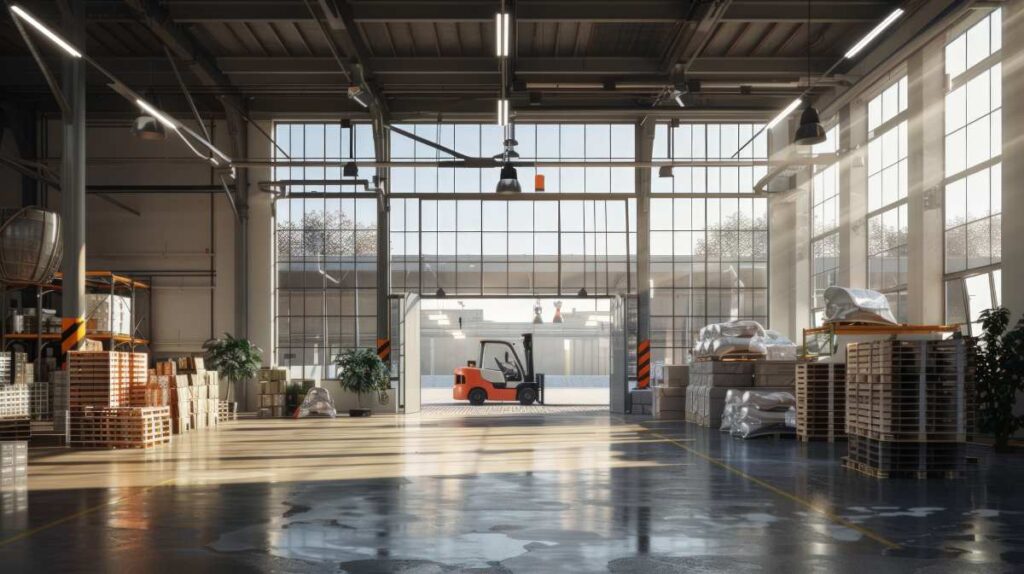
This guide explains what forklift turning radius is, how it is measured, and why it matters for material handling operations.
What Is Forklift Turning Radius?
Forklift turning radius refers to the smallest circular turn a forklift can make. In simple terms, it measures how much space the vehicle requires to turn around completely.
Manufacturers typically specify turning radius as the distance from the centre of the turning circle to the outermost point of the forklift during a turn.
The smaller the turning radius, the easier it is for the forklift to operate in confined areas.
This measurement is particularly important in environments with narrow aisles, tight corners, and limited storage space.
Why Turning Radius Matters
A forklift’s turning radius directly affects productivity, safety, and space utilisation.
Improved Manoeuvrability
Forklifts with tighter turning capabilities can navigate congested areas more efficiently. Operators spend less time repositioning vehicles and can move materials more quickly.
Better Use of Space
A smaller turning radius allows warehouses to use narrower aisles and more compact storage layouts.
This can significantly increase storage capacity without expanding the building footprint.
Enhanced Safety
When operators have sufficient room to manoeuvre safely, the risk of collisions with racking, equipment, and pedestrians is reduced.
Tight turns in restricted spaces can increase the likelihood of accidents, particularly when carrying large or awkward loads.
Increased Productivity
Efficient movement throughout a facility allows operators to complete tasks faster, helping improve overall operational performance.
How Forklift Turning Radius Is Measured
Turning radius is generally measured by calculating the minimum circle a forklift can complete when the steering wheel is turned to full lock.
Manufacturers may publish several related measurements, including:
- Outside turning radius
- Inside turning radius
- Right-angle stacking aisle width
- Overall vehicle length
- Wheelbase dimensions
While turning radius provides a useful indication of manoeuvrability, it should be considered alongside these additional specifications.
A forklift with a small turning radius may still require significant operating space if it has a long chassis or uses large attachments.
Factors That Affect Forklift Turning Radius
Several design characteristics influence how tightly a forklift can turn.
Forklift Type
Different forklift categories are designed for different working environments.
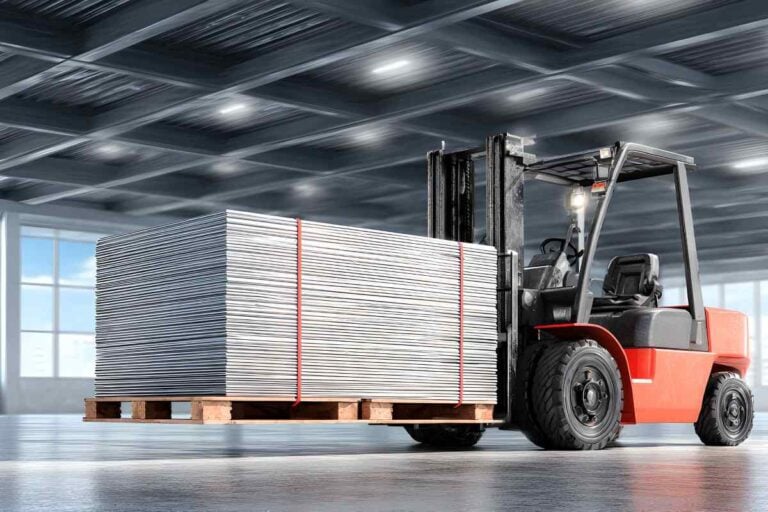
Counterbalance forklifts typically have larger turning radii than specialised warehouse equipment. Reach trucks and articulated forklifts are often designed specifically for narrow aisle operations and can manoeuvre in much tighter spaces.
Wheelbase
The distance between the front and rear wheels affects turning performance.
Generally, shorter wheelbases allow tighter turning circles, while longer wheelbases require more space.
Steering Configuration
Most forklifts use rear-wheel steering rather than front-wheel steering.
This design allows the rear of the forklift to pivot around corners more effectively, providing greater manoeuvrability than many operators expect.
Load Size
Even if the forklift itself can complete a tight turn, the size of the load may increase the space required.
Long loads, oversized pallets, and specialist attachments can all affect turning requirements.
Forklift Dimensions
Overall length, width, and mast configuration all contribute to the amount of space required during operation.
This is why comparing turning radius figures alone does not always provide a complete picture.
Typical Forklift Turning Radius Ranges
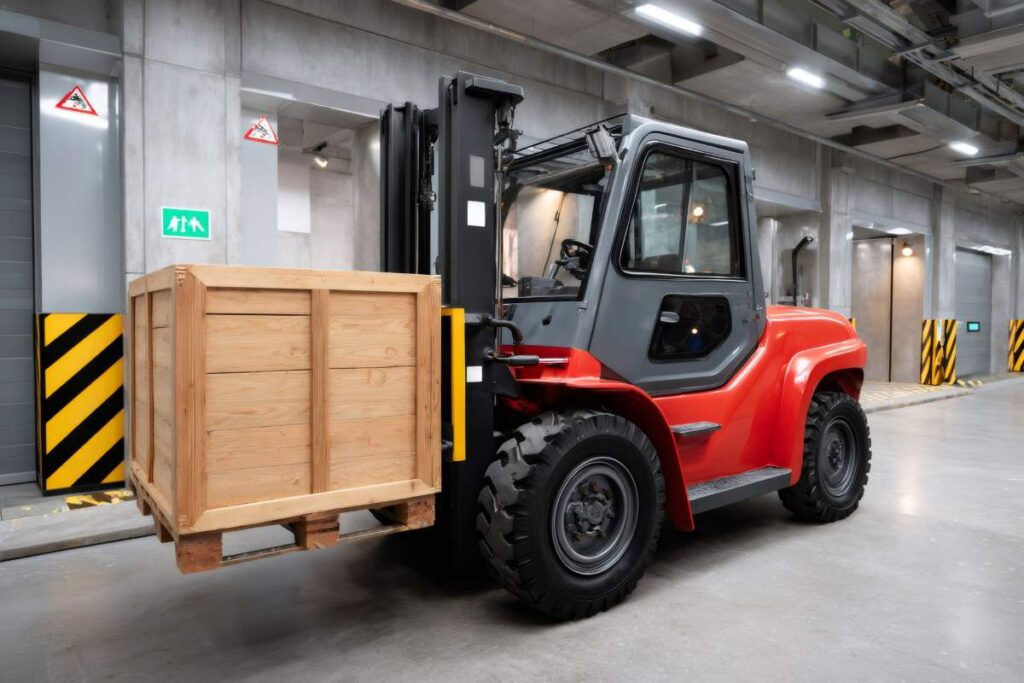
Turning radius varies significantly depending on forklift design and capacity.
As a general guide:
- Electric warehouse forklifts often range from 1.4 to 2 metres
- Small counterbalance forklifts typically range from 1.8 to 2.3 metres
- Medium-sized forklifts often range from 2.2 to 2.8 metres
- Heavy-duty forklifts may exceed 3 metres
Manufacturers publish exact specifications for each model, making it important to review technical data before making purchasing decisions.
Turning Radius and Warehouse Design
Warehouse design and forklift selection should always be considered together.
A common mistake is selecting equipment first and attempting to fit it into an existing layout later.
The available aisle width, storage configuration, and traffic flow patterns all influence the type of forklift required.
Businesses planning new facilities or redesigning existing operations often benefit from professional guidance on warehouse layout planning for forklift operations. Proper planning ensures equipment can operate safely and efficiently while maximising available storage space.
How to Reduce Space Requirements
While turning radius is fixed by forklift design, several strategies can improve manoeuvrability within a facility.
Choose the Right Equipment
Selecting a forklift designed for your operating environment is the most effective solution.
For example, a reach truck may be more suitable than a traditional counterbalance forklift in narrow aisle warehouses.
Optimise Aisle Widths
Aisles should provide sufficient clearance for both the forklift and its loads while avoiding unnecessary wasted space.
Use Appropriate Attachments
Attachments can improve productivity but may increase the effective operating footprint.
Understanding how attachments affect manoeuvrability helps avoid unexpected space limitations.
Train Operators Properly
Experienced operators can manoeuvre forklifts more efficiently, reducing unnecessary movements and minimising the risk of damage.
The Importance of Maintenance for Manoeuvrability
A forklift’s steering system plays a critical role in maintaining its designed turning performance.
Worn steering components, damaged tyres, hydraulic issues, or alignment problems can negatively affect handling and manoeuvrability.
Regular inspections help identify issues before they impact performance or safety.
Professional forklift servicing for warehouse and logistics equipment ensures steering, hydraulic, and mechanical systems continue operating as intended. Well-maintained forklifts not only perform better but also help reduce the risk of costly downtime and repairs.
Choosing the Right Forklift for Your Facility
When evaluating forklift options, turning radius should be considered alongside lifting capacity, load dimensions, aisle widths, operating environment, and future growth plans.
A forklift that is too large for the available space can create bottlenecks, reduce productivity, and increase accident risks. Conversely, selecting equipment with the appropriate turning capabilities can improve efficiency across the entire operation.
Final Thoughts
Forklift turning radius is a critical specification that directly affects manoeuvrability, safety, and warehouse efficiency. Understanding how turning radius works allows businesses to select suitable equipment, optimise storage layouts, and create safer working environments.
While lifting capacity often attracts the most attention, the ability to navigate confined spaces efficiently can have an equally significant impact on productivity. By combining the right forklift with proper warehouse planning and regular maintenance, organisations can maximise both operational performance and available space.